Categories
Events Uncategorized

BESTIA! International conference of Italian modernist studies on “Animals!”

Details

International conference of Italian modernist studies on “Animals!”

Split, Croatia

8-9 July 2016

Organisers

Organized by the Universities of Split (Croatia), Utrecht (the Netherlands) and KU Leuven (Belgium), in collaboration with two international research teams of Modernist Studies www.MDRN.be & http://www.cemstudies.eu and with the support of official authorities such as the Italian Cultural Institute of Zagabria and the Dalmatia region.

URL

Visit  http://mdrn.be/node/307


Categories
Events Lecture

Katherine Mansfield Society Annual Birthday Lecture

Katherine Mansfield Society Annual Birthday Lecture: The Musical World of Katherine Mansfield

Claire Davison (Speaker) and Joseph Spooner (Cello)

Saturday 15 October 2016

Court Room, Institute of English Studies, University of London, Senate House, London WC1E 7HU


About

This year’s Katherine Mansfield Society Annual Birthday Lecture will be in the form of a dialogue between words and music, as cellist Joseph Spooner and Professor Claire Davison explore the musical setting and musical imagination of Katherine Mansfield during the years of her literary apprenticeship.

£20 Non-members Standard

£15 KM Society & IES Members / Concessions / Students

to include wine, birthday cake and a lecture booklet

Please book through the IES: http://www.ies.sas.ac.uk/Katherine-Mansfield


Context

As so many of Mansfield’s biographers are keen to point out, KM was an impassioned student of the cello before she moved towards literary creation, notably studying with the New Zealand composer Thomas Trowell. His sons, Arnold – a cellist acknowledged as a prodigy from childhood – and Garnet, a violinist, were two of KM’s first passionately romantic attachments. Her family’s social circles brought her into close contact with a number of prestigious concert performers from New Zealand, Europe and the United States, making her musical environment during her formative years rich indeed. But what music did she enjoy, and what impact might this have had on her literary apprenticeship? Could the exciting new pulse and rhythms of the music around her have worked their way into her early prose poems as well as providing the themes and setting for many of her later stories? What are we to make of the decidedly fin-de-siècle musical tastes reflected in her early diaries and notebooks? Can we trace interactions of modern music and symbolist literature in her works in the way that we can identify influences of impressionism and post-impressionism, or early cinematography? These are the questions the 2016 Birthday Talk will be setting out to address. The focus will be mainly on the close connection between Mansfield’s early poetics and the experimental brevity of preludes, nocturnes and rhapsodies, many of which were being heard in London for the first time on or about the year 1910. Musical sketches and pictures by composers such as Chopin, Macdowell and Trowell provide a rich soundscape within which to explore Mansfield’s rhapsodic tone-poems, revealing her almost uncanny ability to sound the note of her times, as symbolism and decadence gave way to more resolutely modern resonances.


Speakers

Claire Davison is Professor of Modernist Literature at the Université Sorbonne Nouvelle – Paris 3 and Chair of the French Virginia Woolf Society since 2008. She is a founding member of the Centre for European Modernist Studies based at the University of Perrugia. Claire’s research interests are in the byways and mediations of Modernism – translators and translating networks; the reception and adaptation of European, and particularly Russian, literatures; the interweaving of sound technologies and novelistic experimentalism; broadcasting and the propagation of avant-garde aesthetics; and the interlinks between literary creation and musical expressivity. Her most recent monograph is Translation as Collaboration: Virginia Woolf, Katherine Mansfield and S. S. Koteliansky (2015), and recent co-edited volumes include: Katherine Mansfield and Translation (2015), and Outlanding Woolf – Etudes Britanniques Contemporaines (2015). With Gerri Kimber she has co-editedThe Diaries of Katherine Mansfield (2016), and The Collected Poetry of Katherine Mansfield (2016). http://www.univ-paris3.fr/mme-davison-pegonclaire192762.kjsp?RH=1247239932896


Joseph Spooner’s diverse career has taken him across the UK, from the Baltic to the Atlantic, and from the recording studio to Continental Europe, Russia, New York and Mexico, with numerous appearances at festivals, broadcasts and premieres. Joseph’s investigations into the cello repertoire have led to the rediscovery of unjustly neglected works; audiences have appreciated hearing this music, and critics have offered high praise for Joseph’s recordings of Bush, Krein, Balfe, Coleridge-Taylor, Bainton, Copland, Dyson and Sherwood: ‘Other cellists, please copy!’ (International Record Review); ‘all the expressive power needed’ (Gramophone); ‘superb … arresting in his commitment, his technical facility and in the rich tone he produces from his cello … could not be better’ (International Record Review). 2016 will see Joseph touring in Grand Cayman and New Zealand, and making recordings of English and New Zealand repertoire for cello and piano, and of the Sherwood Double Concerto, with the BBC Concert Orchestra. Joseph was elected an Associate of the Royal Academy of Music in 2012 and is proud to be the dedicatee of works by Alwynne Pritchard, Errollyn Wallen and Martin Read. His instrument was made by Nicholas Vuillaume in c.1865. http://josephspooner.net/

Categories
Events Registration open Uncategorized

Registration: David Jones: Dialogues with the Past – York, 21-23 of July

Registration is now open for David Jones: Dialogues With the Past, an international, interdisciplinary conference to be held at the University of York from July 21st to 23rd, 2016.

Register here now.

About the Conference

In ‘Past and Present’ (1953), David Jones claimed:  ‘The entire past is at the poet’s disposal’. The interweaving of this ‘entire past’ with the present moment fundamentally characterises Jones’s art and thought, from his visual reimagining of historical figures, to the etymologically rich allusions of his poetry, to the unusual philosophy of history manifested in his essays and letters. The analysis of Jones’s visual or poetic works often reflects the act of excavation: the unique layering of images, words and ideas, the resonant symbolism and shades of meaning. the blending of cultural traditions and dynamic interweaving of whole civilisations.

As 2016 marks the centenary of the Battle of the Somme, which profoundly shaped Jones’s imagination and thought, it provides an ideal moment for this conference to reconsider the entirety of Jones’s engagement with the many, various, elusive and intertwined ‘pasts’ through which he conceived history and culture. It will be an opportunity to explore Jones’s own style, subject matter, allusive practice and intellectual questions including the role of ‘memory’, ‘inheritance’ and ‘history’ in art and life, while also reflecting upon Jones’s own past and contemporary moment.

Keynote speakers

Tom Dilworth (English)
Paul Hills (History of Art)
Adam Schwartz (History)

Conference cost

Conference: £65 Waged;
£45 Student/Unwaged

Dinner: £20 Waged;
£15 Student/Unwaged

More information about the conference, including accommodation options and program details, is available on the conference website.

Categories
Events Registration open

Registration: Forgotten Geographies in the Fin de Siecle – July 8-9, Birkbeck

Registration is now open for Forgotten Geographies in the Fin de Siècle, 1880-1920 to be held at Birkbeck College on July 8-9th.

The rate for the two-day conference is £65. The concessionary rate (for students and unwaged speakers) is £30.

Register here now.

About the conference

Recent years have seen an upsurge of interest in fin-de-siècle cultural studies and, in particular, in the growth of cosmopolitanism and internationalism in Europe during the 1880s and 1890s. This critical reception has tended to read British fin-de-siècle culture as a reflection of and reaction to specific European countries, mainly France. The wealth and variety of imperial and industrial Britain’s cross-cultural exchanges, however, has not been generally considered as a whole. British artists and writers of the 1880s and 1890s were avid travellers and readers who came in contact with a vast range of European cultures – Belgian, Bohemian, Greek, Norwegian, Russian, Spanish… As a way of escaping industrialisation and cultural homogenisation, or as a consequence of imperial politics, many artists and writers also interacted with further cultures, such as Chinese, Egyptian, Indian, Moroccan, and Turkish, to name but a few. British authors of the fin de siècle were undeniably influenced by French writing, but also by Scandinavian naturalists like Ibsen and Hamsun, and by the newly translated fiction of Turgenev and Tolstoy.

Likewise, the impact and response to British art and literature in the international cultural community has yet to be explored. Anglomania was a distinct tendency among aesthetes in turn-of-the-century Hungary, Russia, Austria, Ukraine, and Poland, to name but a few. The promotion of British aestheticism was often seen by the locals as a step to modernisation and advancement of national artistic and literary tradition. English magazines, which facilitated revolutionary changes in publishing, design, and international networking, e.g. The Studio, The Yellow Book, The Savoy, were set as examples for the emerging culture of periodicals in Eastern Europe. The late Pre-Raphaelite movement, especially works and ideas of Burne-Jones and Watts, was also a powerful yet underappreciated influence on the development of Symbolism in Polish visual culture.

As recent research questions the cultural segregation between East and West, challenging post-colonial assumptions about imperial hierarchy, and instead emphasising global networks of reciprocity, it is the intention of this conference to further expand this debate. By bringing together established and emerging scholars, we aim to reconsider the intellectual and national foundations of the British fin de siècle, assessing the role of other ‘forgotten’ cultures in the articulation of British cultural movements of the time. At the same time, we intend to unlock and reframe the perception of British authors abroad by explicating the reinvention of the meaning of their work in different cultural, social, and political environments.

Keynotes

Dr Stefano Evangelista (Trinity College, University of Oxford)
Professor Regenia Gagnier (University of Exeter)
Dr Olga Kyrylova (National Pedagogical Dragomanov University)

Further information, including the conference program, is available on the conference website.

Categories
Call for submissions News

News: Katherine Mansfield Studies and Essay Prize

The Katherine Mansfield Society has two calls for submissions open.

The first is for volume nine of Katherine Mansfield Studies, on the topic of Katherine Mansfield and Russia.

The second is for the 2016 Essay Prize on the same topic.

Submissions for both close on the 31st of August, 2016.

Call for submissions: special issue on “Katherine Mansfield and Russia”

Katherine Mansfield’s passion for Russian literature and culture is well known. Anton Chekhov was not just her most significant literary influence, he was a mythological presence with whom she felt a close bond. Indeed, this emotional bond became even stronger when she discovered the two of them shared not just similar artistic sensibilities but also the same deadly disease – tuberculosis. While Chekhov reigned supreme in Mansfield’s world, several other Russian writers, and Russia in general, fascinated her for most of her adult life. This volume seeks essay submissions that engage with all aspects of Mansfield’s response to Russian literature, culture and history, as well as to the Russians she met in England and France.

Submissions of between 5000–6000 words (inclusive of endnotes), in Word format and using MHRA style, should be emailed to the Guest Editor for this volume, Professor Galya Diment, accompanied by a 50 word biography: kms@katherinemansfieldsociety.org

Call for submissions for the 2016 Essay Prize

The Katherine Mansfield Society is pleased to announce its annual essay prize competition for 2016, open to all, on the subject of Katherine Mansfield and Russia.

The winner will receive a cash prize of £200 and the winning essay will be considered for publication in Katherine Mansfield Studies (the peer-reviewed yearbook of the Katherine Mansfield Society, published by Edinburgh University Press)

The distinguished panel of judges will comprise:

Professor Galya Diment, University of Washington, Seattle, US, Chair of the Judging Panel

Dr Rebecca Beasley, University of Oxford, UK

Dr Joanna Woods, Author of Katerina: The Russian World of Katherine Mansfield

Professor Claire Davison, Sorbonne Nouvelle, France

Submissions of between 5000–6000 words (inclusive of endnotes), in Word format and using MHRA style formatting, should be emailed to the Guest Editor for this volume, Professor Galya Diment, accompanied by a 50 word biography: kms@katherinemansfieldsociety.org

Possible topics for both include:

• KM and Russian Literature
• KM and Chekhov
• Translating with Koteliansky
• KM and Tolstoy
• KM, Gurdjieff and his Institute
• The Hogarth Press and Russia
• KM and Marie Bashkirtseff
• KM and Dostoevsky
• KM and Constance Garnett
• KM and the Russian Revolution of 1917
• KM and Russian Ballet and/or Theatre

More information is available on the Katherine Mansfield Society website.


Categories
Uncategorized

Register: Poetic Measures: a variable measure for the fixed – 1-3 July, York

Registration is now open for Poetic Measures: a variable measure for the fixed to be held at the University of York from the 1st to the 3rd of July.

Register here now.

About the conference

How do we measure poetry? The words ‘measure’ and ‘meter’, with their shared etymological origin in the Greek metron, have a long history of being used synonymously. However, when William Carlos Williams wrote that ‘[t]he key to modern poetry is measure, which must reflect the flux of modern life’, he proposed ‘measure’ as an alternative to the metrical foot in response to ‘the flux of modern life’ that demanded measures of more fluid and unstable permutations.

The measures poetry takes in response to an idea of modernity has compelled looking beyond the generic edges of the poem to other art forms. In response to the ‘formless spawning fury’ of ‘this filthy modern tide’, W.B. Yeats’s ‘The Statues’ ends with the aspiration to ‘trace / the lineaments of a plummet-measured face’, rearticulating measurement in terms of sculptural outline, rather than duration of sound. Construing the poem as a coordinated interrelation of spatial measurements, as well as a temporally continuous pattern of sound, these ‘lineaments’ also evoke the silhouette of the poetic line as a visual limit in the structure of the poem. Giorgio Agamben, for one, used this tension between the line break and the sentence to define the lyric poem, a tension Jorie Graham described as ‘the pull from the end, the suction towards closure, and the voice trying (quite desperately in spots) to find forms of delay, digression, side-motions which are not entirely dependent for their effectiveness on that sense-of-the-ending, that stark desire’. These ‘side-motions’ of a poem’s lineation resist the linearity of the sentence, using ‘forms of delay’ not to heighten suspense, but to bypass conventional expectations of closure.

The conference costs £45 or £18 for students.

Keynote speakers

Prof Simon Jarvis (University of Cambridge): ‘*Sordello*-matrix: Robert Browning and the poetics of close counting’
Dr Matt Bevis (University of Oxford): ‘Poetry by Numbers’
Dr Natalie Pollard (University of Exeter: ‘Fugitive Pieces: the poetics of variability’
For further information about the conference, including details of the conference dinner at Betty’s and accommodation, see the Poetic Measures website.
Categories
Events Uncategorized

Event: Theodore Dreiser: from Transatlantic Censorship to Scholarly Editions – 20 May, London

The British Library will host Theodore Dreiser: from Transatlantic Censorship to Scholarly Editions this Friday at the Eccles Centre for American Studies. Tickets cost £8 / £6 /£5 . The event will be followed by a wine reception.

About the event

The team behind a new critical edition of his 1914 novel The Titan reveal the intriguing story of its publication. The American novelist Theodore Dreiser fought many battles against censorship, winning some and losing others. After Harper & Bros. suddenly dropped The Titan, having already typeset and printed 10,000 copies, it was the British publisher John Lane who stepped in to bring out the book.

Drawing on new research, Roark Mulligan traces why and how this happened, focusing especially on the influence of the American-born Emilie Grigsby, herself an author and a prominent London socialite friendly with King Edward VII, Rupert Brooke, and Henry James, whose early life is fictionalised in The Titan.

Jude Davies will talk about how the historical censorship of Dreiser’s novels affects contemporary readers. Focusing on the critical editions of Sister Carrie and The Titan, he will examine how successive editors have grappled with the questions of which text to use and how to present it to readers.

About the speakers

Jude Davies is Professor of American Literature and Culture, University of Winchester, and General Editor of the Theodore Dreiser Edition.

Roark Mulligan is Professor of English, Christopher Newport University, and is volume editor of The Financier (University of Illinois Press, 2011) and The Titan (University of Winchester Press, 2016).

Details and how to book

When: Friday 20 May, 18.30-20.00

Where: British Library Conference Centre

Tickets: £8 / £6 /£5 

Further information and tickets are available at the British Library website.

This event is presented in collaboration with Winchester University Press.

Categories
CFPs Uncategorized

CFP: Minimalism: Location Aspect Moment – 14-15 October 2016, Southampton

The Call for Papers in now live for Minimalism: Location Aspect Moment, which will take place on 14-15 October 2016, hosted by the University of Southampton and Winchester School of Art. 

Proposals are due by June the 29th.

About the conference

When the object comes to itself, abstracting can end, and so can expressiveness. This is one of the thoughts underpinning minimalism in art, but far from the only one, as minimalist sculpture, in particular, began reconfiguring the gallery space, or even the space in which art could happen. The minimalist impulse is to drive creativity into forms so simple, or more accurately, so formal they had to reflect upon themselves while reflecting the viewer in a specular frenzy under cover of nothing happening. The paradoxes of minimalism suggest an equal possibility of de-formation, of formless process. For some time, critics were not happy, understandably, given the rejection of reflection that the radically simplified objects presented. But a consensus has emerged, one that focuses on, and repetitively/compulsively reproduces, a unifying vision of American key artists (Judd, Morris, Flavin, Andre…) of the 1960s. Likewise, a seamless tie binds this art with American minimalist music (Glass, Reich, Adams); but the reality of artistic production across media and forms was far more varied and geographically widespread.

One of the purposes of this Minimalism: Location Aspect Moment is to expand our conception of what minimalism was, where it happened, who was making it, why, and how it extends through time until now. It is clear that the minimalist impulse happened in cross-national encounters (such as the 1967 show Serielle Formationen in Frankfurt) and that Europe was fertile ground for explorations in serial works, in playing with the prospect of singular forms and systematic thinking. Admitting the significance of the naming of the idea of minimalism in the 1960s, we want to look back to earlier versions of the reductionist, repetitive, singularising or multiplying intents of core minimalist endeavour. In short, we wish to see what an expanded field of minimalism looks like, sounds like.

Confirmed keynote speakers

Dr Renate Wiehager (Head of the Daimler Art Collection, Stuttgart/Berlin)
Professor Keith Potter (Reader in Music, Goldsmiths, University of London)
Professor Redell Olsen (Professor of Poetics, Royal Holloway, University of London) (Keynote Performance Lecture)

Call for papers

We want to hear about literature (& writing ABC), dance, building, interior design (& Good Design), gardens (& total fields), science, cybernetics, philosophy, painting, politics, installation, video, cinema, bodily exercise. We want to think about minimalism’s relation to modernism, and how exactly post-minimalism works. We want to think about the softening of minimalism in the 1980s, a twisting of modernist ideals into décor-discipline. We want to recognise the broad scope of projects of reduction, of elimination of the conformities of difference in favour of radical recurrence and stasis.

Contributions are sought from all disciplines; collaborative, creative and cross-media proposals are welcome.

Please send an abstract of  under 300 words to minimalismLAM@gmail.com by June 29th 2016.

The conference is onceived and curated by Dr Sarah Hayden (English, Southampton), Professor Paul Hegarty (University College Cork) with Professor Ryan Bishop (Winchester School of Art, University of Southampton).

Categories
News Uncategorized

News: AFAR is a new research group for the study of EM Forster and his legacy

The Association for Forster and After Research, or AFAR, is an international group of scholars aimed at furthering knowledge of EM Forster’s works and their legacy.

AFAR seeks to bring together different research teams working on Forster. It will initially act as a hub for scholars to share news and discuss the author’s works, while also arranging to hold conferences every other year and produce publications.

The group was formed after a conference on Forster’s legacy held in Tolouse last December – from which a book is also in the works.

Organisers of events linked to Forster are invited to contact to AFAR to circulate details. International collaborations are especially encouraged.

More information is available on the AFAR website.

Categories
Registration open

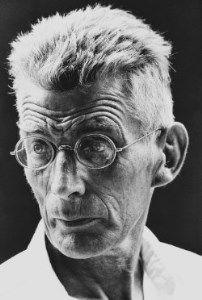
Event: Samuel Beckett: Performance/Art/Writing, 26-28 May, London

Samuel Beckett: Performance/Art/Writing (26-28 May 2016)
Institute of English Studies, School of Advanced Study, University of London

We are very glad to announce that the provisional programme and registration to Samuel Beckett: Performance/Art/Writing, the closing conference of the London Beckett Seminar 2015-16, are now both available. The conference explores the intersections between performance, art, and writing in Samuel Beckett’s prose, theatre, poetry, film, and television. Drawing on recent developments in genetic criticism, digital humanities, performance studies, and literary and philosophical analysis, the conference will examine key strands of Beckett’s work in a range of media in the context of their interrelationship with current artistic, literary and performance practice.

Our programme includes a one-day masterclass held by Dr Mark Nixon and Prof Dirk Van Hulle (26 May), which has received financial support by AHRC CHASE and will be free of charge: we kindly ask you to fill in the on-line form only. The masterclass will be followed by two days of parallel panels and keynote speeches by Prof Andrew Gibson and Prof Anna McMullan (27-28 May). We have also scheduled a wide range of evening events, including a screening of Castro, by Alejo Moguillansky, a pre-theatre conference dinner, and a series of events at the Print Room at the Coronet Theatre, with high reductions on standard ticket prices.

Early-bird rates on conference registration will be valid until Sunday, 15th May.

Further details, including how to register, are available on the conference website.
Academic organisers:
Derval Tubridy, Goldsmiths, University of London
Stefano Rosignoli, Trinity College Dublin, University of Dublin