
The call for papers is now open for Editing the Twentieth Century, to be held at the British Library on September 5.
Category: CFPs
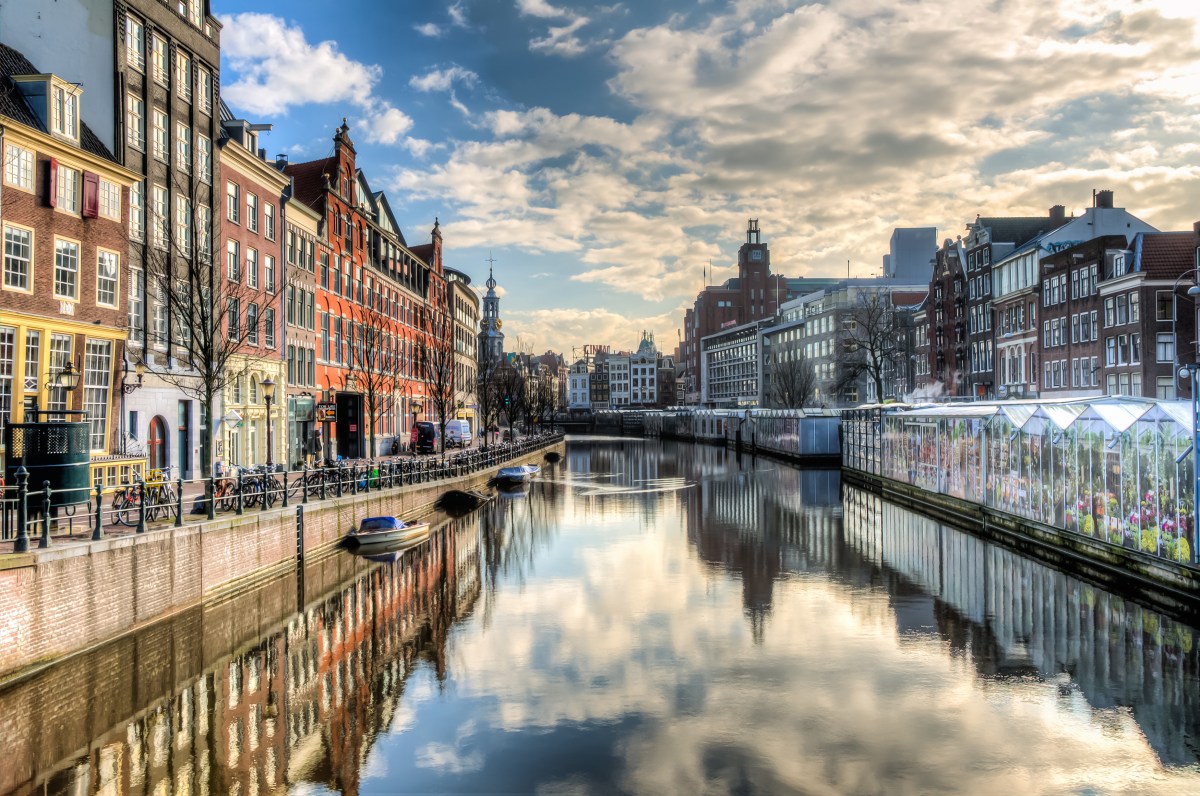
With the call for papers extended, there’s still time to find a panel for this year’s Modernist Studies Association conference, to be held August 10-13 in Amsterdam.
Not sure who to approach? Try some of the suggestions below.
The call for papers is now live for Remaking the New, to be held at Queen Mary, University of London on the 13-14 July, 2017.
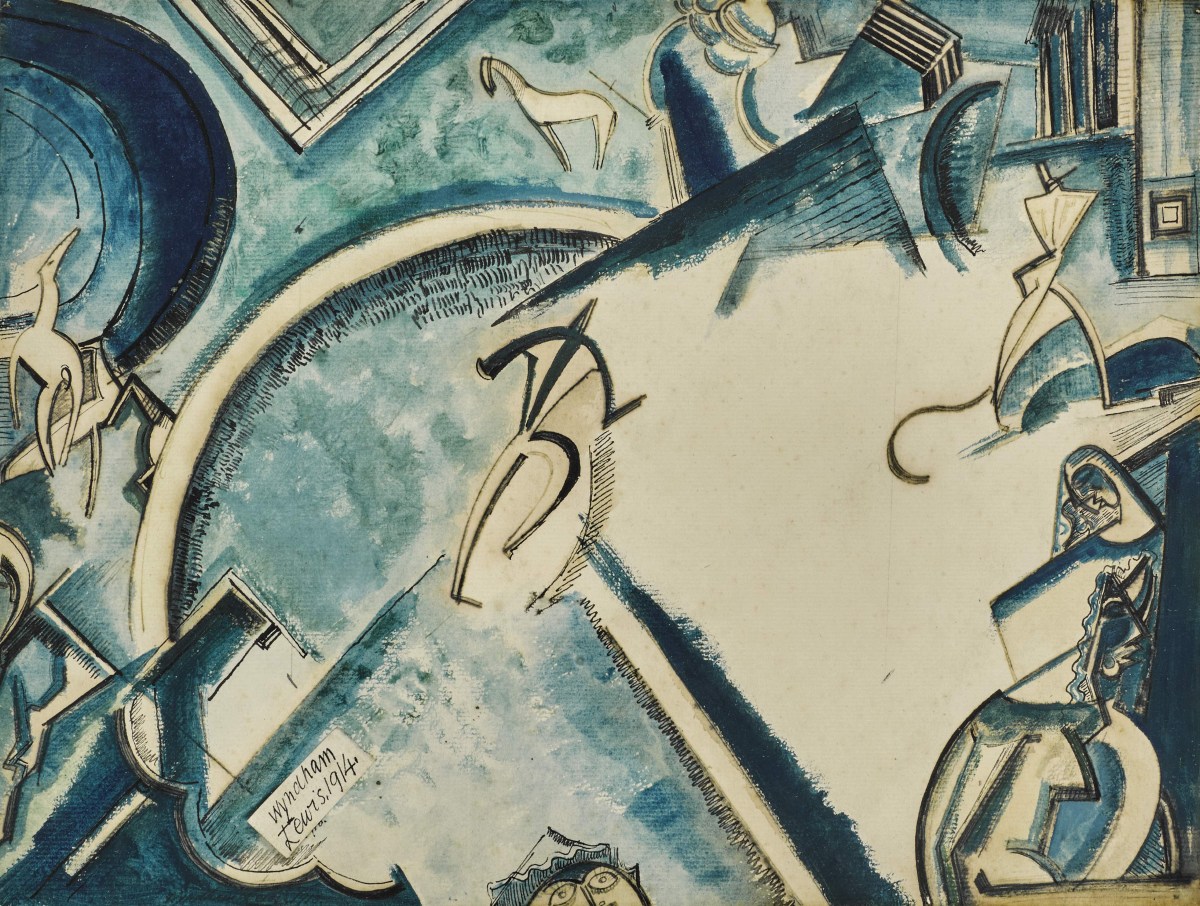
The call for papers is now open for “Benign Fiesta: Wyndham Lewis’s Texts, Contexts, and Aesthetics”, to be held at the University of Nottingham from the 11-13 September, 2017.
The call for papers is now open for Ian Hamilton Finlay: Little Fields, Long Horizons, a symposium which will take place next year at the University of Edinburgh on July 13 and 14, with an associated event at Little Sparta on July 15.
Submissions are due by March 10. The conference is supported by the British Academy.
About the conference
This two-day symposium will explore new critical and interdisciplinary perspectives on the Scottish poet, artist and avant-gardener Ian Hamilton Finlay (1925-2006). As Finlay’s reputation worldwide continues to grow a decade after his death, we wish to ask searching questions about the boundaries of his practice, its philosophical, political and cultural dimensions, and its legacies and affinities across a range of media, disciplines and geographical boundaries. A number of attendees will also have the chance to visit Finlay’s poet’s garden at Little Sparta in the Pentland Hills for an event in its new workshop space.
Keynotes: Susan Stewart, Princeton University
Stephen Bann, University of Bristol
Drew Milne, University of Cambridge
Topics for discussion include, but are not limited to:
Finlay and late modernism(s)
Little Sparta and ecology
Finlay and poetics, including objectivist/concrete/visual/new-media poetics
Finlay and visual/conceptual art
Finlay in context: encompassing movements/milieus/cultures; associated figures
Finlay and the political, including Finlay as revolutionary/counter-revolutionary, Finlay and the French Revolution, Finlay and the Third Reich
“Flytings” and “Battles” as aspects of avant-garde practice
Finlay as collaborator/Finlay’s collaborators
Finlay and European romanticism
Finlay and the (nuclear) sublime
Neo-classical and pre-Socratic re-armaments
Finlay and (inter)nationalism
Finlay and Northern Renaissances
Wild Hawthorn Press and small-press publishing as creative practice
Finlay and landscape architecture/garden design
Ongoing and contemporary creative responses to Finlay’s work
250-word abstracts for twenty-minute papers and 500-word abstracts for full panels/round-tables will be accepted by the organisers Greg Thomas and Alex Thomson at Greg.Thomas@ed.ac.uk until 10th March 2017. However, participants are asked to respond with expressions of interest as soon as possible. For up-to-date event and attendance fee details visit our website.
The call for papers is now open for Alphonse Legros in France and in Britain: A Tale of Two Countries, an international conference to be held at the University of Burgundy and Museum of Fine Arts, Dijon, on May 4-5, 2017.
About the conference
Although he was born and possibly taught in Dijon, Alphonse Legros spent most of his life in Britain where he was appointed professor at the Slade School of Fine Art in 1876. Legros held the position until 1893, introducing etching and, later, sculpture to the syllabus. In 1880, he was one of the six founding members of the Society of Painter-Etchers which was to play an influential role in the late Victorian revival of printing. He was also instrumental in the modern revival of the cast portrait medal. When he died in 1911, Legros was a British citizen and a distinguished artist. The Tate Gallery organized the largest-ever retrospective of his works. However Legros did not forget France, nor did France forget him: a one-man show was held at Samuel Bing’s L’Art Nouveau gallery in 1898, and a large retrospective exhibition was curated by Léonce Bénédite at the Musée du Luxembourg in 1900. In Dijon, the Musée des Beaux-Arts set up an exhibition in 1987 and recent smaller events in France testify to an enduring interest for this transnational and transmedia artist.
The conference organized at the University of Burgundy (Dijon) in May 2017 by the Centre Interlangues (Texte-Image-Langage) and the Musée des Beaux-Arts will revisit Legros’s work and role as well as his legacy and reception in the 20th and 21st centuries.
Conference convenors
Sophie Aymes, University of Burgundy
Bénédicte Coste, University of Burgundy
Bertrand Tillier, University Paris 1 Panthéon-Sorbonne
Keynote Speakers
Elizabeth Prettejohn, University of York
Stephen Bann, University of Bristol
Submissions
We invite art historians, specialists of Victorian visual culture and aesthetics, curators, collectors and art school teachers to send proposals for 20-minute papers that explore the following themes in this non exhaustive list:
- Legros and the visual culture of his time in relation to Aestheticism, pre-Modernist aesthetics and the revival of the graphic arts;
- Legros, a multi-media artist with an experimental legacy: techniques (etching, lithography, painting, drawing, medal making) and transmediality;
- Legros in France: the ‘Société des Trois’; the creation of the Société des Aquafortistes, and its first portfolio in 1862; Legros’s later career in France;
- Legros and illustration: his own illustrations (to Edgar Poe’s stories for instance); his influence on contemporary illustrators;
- Legros and British artists: acquaintanceships, avant-garde, networks of sociability and influence (D. G. Rossetti and F. Watts for instance);
- Art school teaching: Legros’s teaching method and influence as professor of etching at the South Kensington School of Art and as Slade Professor; changes to the curriculum, Legros in the history of the teaching of fine arts and draughtsmanship;
- Legros’s influence on younger artists (H. S. Tuke, Charles Furse, and William Strang, Philip Rothenstein, Charles Shannon, Augustus John);
- France and England: cross-fertilisation and artistic transfers, recognition and/or neglect;
- The history of the reception of his work: connoisseurship, tradition and transmission; building up collections in the UK and in the US; Legros on the contemporary market both in Britain and in France.
Please send a 300-word abstract and a short biography before 1st January 2017 to:
Sophie Aymes: sophie.aymes@u-bourgogne.fr
Bénédicte Coste: benedicte.coste@u-bourgogne.fr
Bertrand Tillier: bertrand.tillier@univ-paris1.fr
Notification of acceptance: 15th January
The Call for Papers in now open for the second Modernist Network Cymru (MONC) conference, to be held at The Drwm, National Library of Wales, Aberystwyth on the 12th and 13th of September, 2017.
About the conference
For its second conference, organised in conjunctions with Aberystwyth University’s David Jones Centre for Word and Image, the National Library of Wales and the Aberystwyth School of Art, Modernist Network Cymru (MONC) aims to interrogate the symbiotic relationship between the visual arts and the written word. How did modernist artists respond to literary texts? How did writers incorporate visual elements into poetry and prose? How did author and artist collaborations arise? And how did modernist texts, from collages to magazines to scrapbooks, combine word and image in radical new ways?
In Wales, figures such as David Jones, Brenda Chamberlain and Margiad Evans worked across art and literature, whether in poetry and painting or short stories and illustration. Texts such as Chamberlain and Alun Lewis’s Caseg Broadsheets juxtaposed modern poetry with experimental woodcuts; more recently, the photographer Aled Rhys Hughes and the Welsh National Opera have both produces multimedia responses to Jones’s prose poem In Parenthesis.
Over the course of two days, we aim to explore the multitudinous connections between word and image in a range of modernist texts from Wales and beyond. We invite interdisciplinary responses to any aspect of word and image in modernism, but we particularly welcome scholars working on Welsh modernist writers and artists, as well as modernist art and writing in Wales. The full story of the visual arts in Wales is only just beginning to unfold; this conference provides us with an opportunity to discuss future research in this developing field. What should a Welsh modernist art history be, and what relationship should it have to its sister arts, especially literature?
Although we are a Welsh Network, we have an international outlook. We are interested in Welsh art and literature’s international connections, as well as how place, language and history affected experiments in word and image elsewhere, especially in other ‘small nations’.
With these histories in mind, we invite proposals on topics including but not confined to:
- Literary responses to art
- Artistic responses to literature
- Artist-writers (and vice versa)
- Radical combinations of word and image
- Cross media projects, e.g. magazines, posters, graphic novels
- Book design / illustration / illustrated books
- Similarities and differences between visual and verbal forms of art
- Visual, film or literary adaptations
- Interdisciplinary collaborations
- Images and titles / captions
- Film and /or intertitles
- Architectural interventions
- Colour in literary and visual forms
- Photography and photographer’s books / travel guides
- Contemporary inter- / multi-disciplinary responses to modernism
- Opportunities and challenges of visual arts practice-based PhD
How to submit
The National Library of Wales and the School of Art welcome researchers who wish to explore their extensive archives, with the aim of presenting a conference paper based on their research.
Proposals for papers (20 minutes) should include a summary of the proposed paper (300 words), the speaker’s contact details and a short biography (100 words). Papers can be delivered in English or Welsh with simultaneous translation; please indicate the language in which you wish to deliver your paper. If you wish to submit your abstract and biography to us in Welsh please also send a copy in English.
Proposals should be sent to modernistnetworkcymru@gmail.com by 31st January 2017.
Since 2014, MONC has aimed to showcase a range and diversity of research into modernism happening in Wales today. Through its website, mailing list and conferences, it brings together scholars and professionals working on modernism in Wales and beyond to encourage collaborations and communication. For more information, please visit our website.
The call for papers is extended for a conference on Britain, Canada, and the Arts: Cultural Exchange as Post-war Renewal to be held at the Institute of English Studies, London, from the 15-17 June, 2017.
Proposals are invited until December 1.
About the conference
Papers are invited for a major international, interdisciplinary conference to be held at Senate House, London, in collaboration with the School of English, Communication and Philosophy (Cardiff University) and the University of Westminster. Coinciding with and celebrating the 150th anniversary of Canadian Confederation, this conference will focus on the strong culture of artistic exchange, influence, and dialogue between Canada and Britain, with a particular but not exclusive emphasis on the decades after World War II.
The immediate post-war decades saw both countries look to the arts and cultural institutions as a means to address and redress contemporary post-war realities. Central to the concerns of the moment was the increasing emergence of the United States as a dominant cultural as well as political power. In 1951, the Massey Commission gave formal voice in Canada to a growing instinct, amongst both artists and politicians, simultaneously to recognize a national tradition of cultural excellence and to encourage its development and perpetuation through national institutions. This moment complemented a similar post-war engagement with social and cultural renewal in Britain that was in many respects formalized through the establishment of the Arts Council of Great Britain. It was further developed in the founding of such cultural institutions as the Royal Opera, Sadler’s Wells Ballet, the Design Council and later the National Theatre, and in the diversity and expansion of television and film.
While these various initiatives were often instigated by a strong national if not nationalist instinct, they were also informed by an established dynamic of social, political, and cultural dialogue. In the years before the war, that dynamic had been marked primarily by the prominent, indisputably anglophile voices of such influential Canadians in Britain as Beverly Baxter and Lord Beaverbrook. In English-speaking Canada, an established recognition of Britain as a dominant, if not originating, influence on definitions of cultural excellence continued to predominate. In the years following the war, however, that dynamic was to change, and an increased movement of artists, intellectuals, and artistic policy-makers between the two countries saw the reciprocal development of an emphatically modern, confident, and progressive definition of contemporary cultural activity.
This conference aims to expose and explore the breadth of this exchange of social and cultural ideals, artistic talent, intellectual traditions, and aesthetic formulations. We invite papers from a variety of critical and disciplinary perspectives — and particularly encourage contributions from scholars and practitioners working in theatre, history, literature, politics, music, film and television, cultural studies, design, and visual art.
Some indicative post-war cultural figures and areas of influence:
- Henry Moore and the Art Gallery of Ontario
- John Grierson at the National Film Board
- Leonard Brockington and the CBC
- Sydney Newman, Alvin Rakoff and British and Canadian television drama
- Tyrone Guthrie, Barry Morse, Tanya Moiseiwitch, Alec Guinness, Maggie Smith, John Neville, Christopher Newton, Robin Phillips, Barry Morse, Brian Bedford, Christopher Plummer, Donald Sutherland, and others: developments in staging, acting, repertoire, and theatre-design at the Stratford Festival, the Shaw Festival, the Old Vic, the Chichester Festival Theatre, the National Theatre
- Powys Thomas at the CBC, the Stratford Festival, and the National Theatre School of Canada
- Celia Franca, Gweneth Lloyd, and national ballet
- Robertson Davies as novelist, actor, cultural critic in Britain and Canada; at the Stratford Festival; at the University of Toronto’s Massey College
- Yousuf Karsh and the iconography of the mid-twentieth century
- Intellectual exchange and influence: Northrop Frye, Harold Innis, Marshall McLuhan, John Kenneth Galbraith
- Elizabeth Smart and the London literary scene
- Ronald Bryden and theatre criticism in London
- Benjamin Britten and Michael Tippett: Canadian tours and compositions
- Glenn Gould as musical interpreter, recording artist, celebrity personality, documentarian
- Mordecai Richler, the cultural scene in London, and the dramatization of Anglophone Quebec
- Mazo de la Roche and Lucy Maud Montgomery: literary influence and adaptations
- Ben Wicks as cartoonist, journalist, and post-war memoirist
Other areas of exploration include (but are certainly not limited to):
- Quebec and ‘French Canada’ in the British artistic scene
- The cultural presence and influence of the Governor General
- Publishers and publishing networks
- Newspapers, media magnates, and editorialists from Beaverbrook to Black
- Universities and the ‘modernisation’ of higher education
- Popular culture and popular music
- Cultural policy-making
- Traditions of humour and satire
- ‘Distinct cultures’ within the larger nation
- Constructions of indigeneity and native culture
- National culture as anti-Americanism
- Definitions of diversity, audience, and national identity
- Architecture and urban development
- More recent and contemporary exchanges in literature, art, politics, theatre, film, design, television, and the media
How to submit
Proposals (max. 250 words) for papers of 20 minutes can be sent to the organizers, Irene Morra (Cardiff University) and John Wyver (University of Westminster), at canbritconference@gmail.com by 1 December 2016.
More information is available via the conference website.
The call for papers is now live for Austerity Gardens, an essay collection to be edited by Dr Naomi Milthorpe.
About the collection:
The editor seeks 500-word proposals for submission to an edited collection devoted to the politics and poetics of austerity gardening in literary and material cultures in the Anglophone world from the Second World War onwards.
Austerity gardening encompasses a diversity of places, spaces, practices, and actors: from suburban allotments to country house gardens, Victory diggers to urban foragers. Gardens are liminal spaces, private zones, and contested sites, mobilized against foreign invaders whether human or nonhuman. Gardens and gardening are gendered, and in place and practice revelatory of shifting, contingent, and multiple modes of gender and sexual identity. They are idealized, yet ever-incomplete, utopian sites. Gardening is also big business, with global market reports indicating increased demand for DIY products worldwide in the decade since the global financial crisis. Thus gardening and garden literature proffers rich soil for understanding the commodifications and uses of culture, whether highbrow or popular, in the mid-to-late 20th century and beyond.
Following the global financial crisis, there has been a parallel burgeoning scholarly interest in austerity. As Rebecca Brammall suggests, the discourses of austerity articulate a range of ideological, cultural, economic and social agendas. Most significant, however, is the way in which the agendas of austerity – many of them expressed in terms of utopian/dystopian anxieties about the self and society – are mapped upon representations of wild and human landscapes. Responses to austerity develop from a relationship with the environment; these responses in turn renovate the ways in which these spaces and places are imagined in literature and the arts from the Second World War onwards.
Landscape is material, but it is also as Denis Cosgrove argues a “cultural concept” and “way of seeing”. Nowhere is this more apropos than the garden, a pre-eminently human landscape in which desire and identity is embedded, nurtured and reflected. The garden is a site of nature and culture, an art which in the words of The Winter’s Tale“itself is nature.” Though the country house and pastoral traditions represent the garden as an unchanging, aristocratic, leisurely “green and pleasant land”, austerity seeks to reimagine the backyard as a dynamic, democratic space of self-sacrifice and toil.
From these roots sprout a range of interdisciplinary topics and questions related to austerity gardening. From the “Dig for Victory” campaign to contemporary cultures of ethical consumption, green living and gardening as entertainment, this collection invites proposals for readings of literature, film, visual arts, crafts, media, and cultural history, in order to explore the ways in which gardening is mobilised to contest and celebrate discourses of austerity, ethics, and responsibility in the Anglophone world from the Second World War to the present day. Chapters are invited on topics including, but not limited to:
- Representations of austerity gardens in literature, film, visual arts and crafts
- Gardening memoirs and personal narratives of committing to sustainability
- Austerity gardens in popular media (television, magazine culture, blogs)
- Theatrical performance in/and austerity gardening
- Public or private austerity gardens and their relation to nationalist politics – allotments, national trust houses, community gardens
- Identity politics and/ in the garden, including gendered and classed practices of both gardening and austerity
- Gardens in/as war zones
- The non/human in the austerity garden
- Ethical consumption
- The pastiching of WW2 and 1950s austerity garden practices in contemporary cultural products
- Interdisciplinary approaches to reading austerity gardens and landscapes
- Austerity gardens and post-human futures
For queries or to submit a proposal, please contact the editor at Naomi.Milthorpe@utas.edu.au
The Call for Papers is now live for Beyond Genius and Muse: Collaborating Couples in Twentieth-Century Arts, to be held at the University of Bristol in April 2017.
Abstracts are required by December 16.
About the conference
Examining collaborating couples can force us to rethink the paradigms of working relationships in the arts; especially those of the twentieth century, where ideas of genius and muse are in total flux. Whether couples collaborated or hindered each other, what are the means to describe such complex creative partnerships? How can feminism, gender theories, and queer studies help shift perceptions and rediscover hidden powers and intimate connections? What methodologies can we use to research and write about intra-art and interdisciplinary couples? How do such couples perceive themselves and their work? This conference seeks to engage with all kinds of collaborating couples, be it cases where traditional roles are intact, reversed, or changed otherwise.
Keynotes
Prof. Frances Spalding CBE, FRSL
Anthony Payne & Jane Manning OBE
Suggested topics
Muses vs. geniuses in creative partnerships
Related isms: feminism, modernism, post-modernism, etc.
Queer perspectives
Methodological challenges (biography, comparative biography, life writing, archives and legacies, constructs like Michèle LeDoeuff’s ‘Heloise complex’, etc.)
Challenges in interdisciplinary partnerships/approaches
Collaboration and obstruction in partnerships
Partnerships between creative artists (writers, poets, fine artists, composers, performers, etc.) and ‘enablers’ (editors, gallerists and dealers, critics, conductors, etc.)
How to submit
Proposals can be for 20-minute individual papers or 90-minute collaborative panels or lecture-recitals of max. 90 minutes. Proposals should not exceed 300 words, biographies (optional) 150 words. Please submit your proposal on the website. If you would like to compete for one of three postgraduate travel bursaries, please identify yourself as a postgraduate student in your proposal.
Conference fees, details on registration and the conference dinner will be posted on the website.
Organiser and Programme Committee
Dr Annika Forkert (Organiser; University of Bristol)
Dr Adrian Paterson (NUI Galway)
Dr Sarah Terry (Oglethorpe University)
Dr Tom Walker (Trinity College Dublin)
Contact
Please email collaboratingcouples@yahoo.co.uk
 British Association for Modernist Studies - Website Designed and Developed by Callum Leith