Categories
Events Seminars

Symposium: The Paris Commune at 150, London, 2 Nov 2021

Tuesday, 2 November 2021, 9.30-19:00 GMT, at The Royal Foundation of St Katharine (London)
We celebrate the 150th anniversary of the Paris Commune with an in-person symposium. The event brings together scholars from a range of disciplines to explore the literary, political, and artistic legacies of the Paris Commune. The symposium will consist of four panels and a concluding roundtable. For the full programme, see:  https://www.eventbrite.co.uk/e/the-commune-at-150-tickets-180793687787

Confirmed participants include Mark Allison (Ohio Wesleyan), David A. Shafer (California State), Isobel Armstrong (Birkbeck), Mark Steven (Exeter), Constance Bantman (Surrey), Matthew Beaumont (UCL), Antony Taylor (Sheffield Hallam), Owen Holland (UCL), Kristin Grogan (Rutgers), Clare Pettitt (KCL), Scott McCracken (QMUL), Julia Nicholls (KCL), Terence Renaud (Yale), Patrick Bray (UCL), Ruth Kinna (Loughborough), Esther Leslie (Birkbeck), Adrian Rifkin (Dutch Art Institute), and Kristin Ross (NYU).

Organizers: Charlotte Jones (QMUL) and Benjamin Kohlmann (Regensburg). Please note that there is no registration fee but that due to Covid restrictions attendance is limited to registered participants. Please use the Eventbrite link to register for the event:  https://www.eventbrite.co.uk/e/the-commune-at-150-tickets-180793687787

Categories
Uncategorized

In Memoriam: Professor Laura Marcus

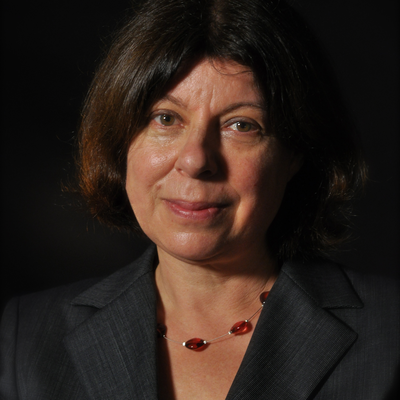
Image credit: Professor Laura Marcus FBA | The British Academy

We were deeply saddened to learn of the death of Laura Marcus on Wednesday 22 September, after a short illness. During the course of her distinguished career, Laura was a friend, teacher, and colleague to many of us. Her work on autobiography, Virginia Woolf, psychoanalysis, and cinema profoundly informed the modernist studies we practise now, and her books, characterised by historical depth, theoretical acumen, and vivid prose, were justly lauded: The Tenth Muse: Writing about Cinema in the Modernist Period (2007) was awarded the MLA’s James Lowell Prize.

Laura was a sparkling orator. Many modernists, all over the world, have been enthralled by her brilliant papers at the conferences and seminars she so much enjoyed attending. We were grateful to have Laura as our introductory speaker at the 2010 Inaugural BAMS conference in snow-laden Glasgow. She truly recognised the importance of our organisation in fostering the modernist community in the UK. Collaboration was at the heart of Laura’s work; this is reflected not only in her strong presence at academic events, but in her many co-authored publications, including Close Up 1927-1933: Cinema and Modernism (1999) and The Cambridge History of Twentieth-Century English Literature (2004), and her work on Women: A Cultural Review

Laura was a caring, considerate listener. BAMS members, past and present, have benefited from her interested and astute questions about our own work, her candid career advice, and her amazing ability to untangle and clarify knotty thinking. She was incredibly generous with her time, despite the numerous scholarly projects, committees, and other academic labours that took up considerable space in her diary. She was notably supportive of early career scholars, and was deeply committed to the graduate students she taught and supervised at Kent, Southampton, Birkbeck, Sussex, Edinburgh, and Oxford, and the remarkable number of doctoral candidates she examined.

Laura was also a wonderful, witty friend. Alongside the deeply intellectual conversations, we will cherish the moments of lightness and merriment we shared with her: chats about the sumptuous costumes in Mad Men; her inexplicable – yet strongly felt – dislike of red sauce; and the many giggly taxi rides back from conference dinners. For many of us, Laura was the model for the scholars, teachers, and colleagues we aspire to be.

Categories
CFPs NWIMS Past Events

New Work in Modernist Studies 11, online, 10 Dec 2021 (deadline 20 Oct)

About the conference

The eleventh one-day graduate conference on New Work in Modernist Studies will take place online on Friday 10 December 2021, in conjunction with the Modernist Network Cymru (MONC), the London Modernism Seminar, the Scottish Network of Modernist Studies, the Northern Modernism Seminar, the Midlands Modernist Network and the British Association for Modernist Studies (BAMS).

BAMS is dedicated to fostering a culture of diversity and inclusion (please see our Code of Conduct).   As in previous years, this conference will take the form of an interdisciplinary programme reflecting the full diversity of current graduate work in modernist studies; it encourages contributions both from those already involved in the existing networks and from students new to modernist studies who are eager to share their work.  We particularly encourage proposals from BAME students, who we recognise are underrepresented in the field.

Usually the event is open only to students at British and Irish institutions as we offer each student a travel bursary.  However, as the event will be held virtually again this year, we encourage PhD students from around the world to apply.  The conference will be held during the working day in the UK (approx. 9.30am – 5pm, with regular breaks); please let us know if you are attending from elsewhere in the world and need this to be taken into account.

The day will include a plenary session, with details to be confirmed.

Unfortunately, the coffee breaks and drinks reception will still have to be in your own home this year.  We are keen to enable the making of connections that usually happens in those spaces between academic papers and panels, and are working on ways of doing so.

Proposals
Proposals are invited from registered PhD students for short (10 minutes maximum) research position papers.  Your proposal should be no more than 250 words. Please also include a short biography of no more than 50 words.  If you are outside the UK and Ireland, please give your location and time difference to the UK.

Proposals for and questions about the event should be sent to nwims@bams.ac.uk.

Deadline for proposals: 9am UK time, Wednesday 20 October 2021.

Acceptance decisions will be communicated within two weeks.

Applicants and delegates are encouraged to let us know about any access needs they might have, and if we are able to adjust the application or presentation process, we will endeavour to do so.

Registration
We’ll host the conference by Zoom, and there won’t be any charge to attend.

Categories
Uncategorized

Symposium: Avant-Gardes/Contagion/Hygiene (Glasgow, 26 Nov 2021)

Avant-Gardes / Contagion / Hygiene is an interdisciplinary symposium hosted online by the University of Glasgow on 26 November 2021.

The event brings together scholars in the fields of art history, theatre, visual culture, and literature to explore intersections and interactions, dating from the late nineteenth century to the mid-twentieth century, between the artistic avant-garde and themes of health and hygiene, such as illness, contagion, cleanliness, and contamination.

Whilst the ongoing covid-19 pandemic has brought these themes – as well as the complex and highly charged discursive field they inhabit – to the fore of popular and political discourse, they have always been central to debates around processes of modernisation.

Examining the artistic oeuvres of some of the great names of modern art – Edgar Degas, Edvard Munch, Pablo Picasso, George Orwell, Marcel Duchamp, Antonin Artaud, et al. – the symposium investigates instances where the heightened political, social, and cultural currencies embedded within such hygienic issues have been mobilised, and subversively exploited, to fuel the critical strategy at play.

As such, the symposium promotes an interdisciplinary and socio-historically contextualised understanding of the criticality of the avant-garde gesture and seeks to cultivate scholarship that moves beyond and transgresses the limits of traditional academic subjects to produce innovative and thought-provoking connections and interrelations across various fields.

Full Program with Abstracts

Speakers
David Hopkins (Professor of Art History, University of Glasgow)
Anthea Callen (Professor of Art, Australian National University)
Fae Brauer (Professor of Art and Visual Culture, University of East London)
Carl Lavery (Professor of Theatre and Performance, University of Glasgow)
Abigail Susik (Associate Professor of Art History, Willamette University)
Allison Morehead (Associate Professor of Art History, Queen’s University)
Alison Syme (Associate Professor of Modern Art History, University of Toronto)
Peter Fifield (Lecturer in Modern Literature, Birkbeck, University of London)
Disa Persson (Doctoral Researcher in Art History, University of Glasgow)

Please register for your free ticket now to receive updates and a link to the online event.

Questions: Disa Persson / d.persson.1@research.gla.ac.uk

Categories
Call for submissions CFPs

CfP: Hope Mirrlees’s Paris: A Poem at 100 (Online cluster; abstract deadline 1 Oct 2021; article deadline 1 Mar 2022)

Modernism/modernity Print Plus Cluster Proposal

2020 marked the 100th anniversary of “modernism’s lost masterpiece,” Hope Mirrlees’s Paris: A Poem. Published by Hogarth Press in the spring of 1920, and typeset by Virginia Woolf, this ground-breaking long poem maps the range of continental avant-garde aesthetics of the 1910s even as it both engages and anticipates the mythical methods and epic conventions of James Joyce, Ezra Pound, and T.S. Eliot.

This proposed Modernism/modernity Print Plus cluster hopes to present new work that reassesses the singularity of Mirrlees’s poem as well as its place within the broader network of literary modernism and early twentieth-century poetics. While scholars such as Julia Briggs, who produced the first annotated edition of the poem in Gender in Modernism: New Geographies, Complex Intersections (2007), and Sandeep Parmar, who edited the first critical edition of Mirrlees’s Collected Poems (2011), have done the important archival and recovery work that restored Paris to critical attention, Peter Howarth solidified Paris’s position within the modernist “canon” with his chapter, “Why Write Like This?,” in The Cambridge Introduction to Modernist Poetry (2011), which introduces readers to the disorienting pleasures of modernism’s most famous poems through an extended analysis of Mirrlees’s “difficult” work (16). Building on these approaches, this cluster aims to initiate a new wave of Paris scholarship that complicates and extends the poem’s aesthetic, cultural, and socio-political import on the occasion of its centenary.

This Print+ cluster will demonstrate how engagement with Paris speaks not only to Mirrlees’s text but also to broader interests within modernist studies. We therefore seek a selection of articles that both pay tribute to the exceptionality of the poem and insist on the “complex intersections” that resist canonical trends of exceptionalizing marginalized writers like Mirrlees. While some interventions may consider detailed aspects of the poem, its influences, and its legacies, others may focus on Mirrlees’s work more generally and in relation to her contemporaries. Additionally, given M/m’s long history of engagement with Eliot and the The Waste Land, especially their recent Print+ cluster on “Reading ‘The Waste Land’ with the #MeToo Generation,” we seek contributions that help us to respond to the urgent questions: why Paris and why now? As an alternative to revisiting TWL’s position within the High-Modernist canon, can we, to quote the editor of the Eliot cluster, examine the ways in which Paris “acts as a kind of test case of how the #MeToo generation can change the way we read”? How might this poem spark new conversations about the relation among gender, sexuality, and power in modernist studies?

Our hope is that a Print+ cluster, which will be widely accessible and allow for an unprecedented engagement with the poem through the platform’s ability to include digital material (archives, visual culture), together with the recent publication of a new, smaller, and more affordable edition of the poem (Faber & Faber 2020), will facilitate the inclusion of Paris on more syllabi, igniting future waves of scholarship centered on this long under-appreciated poem and its networks.

Topics may include:

Teaching Paris

Hogarth Press

The history of the circulation of Mirrlees’s poem

The poem in relation to its (anti)colonial and Imperial interventions

Paris in dialogue with non-Western Modernisms

Mirrlees and translation

Mirrlees’s materialism

Cinema and visual culture

The city poem

Psychoanalysis and poetic form

Politics of poetics/aesthetics

Gender and sexuality in Paris

Queer(ing) Paris

*Abstracts (~250 words) due: October 1 2021. Please send to editors Nell Wasserstrom and Rio Matchett at wassersn@bc.edu and r.a.matchett@liverpool.ac.uk with the subject line “Hope Mirrlees Print+ Submission.” The editors also welcome queries.

*Selected abstracts will be followed by short articles (~3000 words) due March 1 2022. The cluster will then be submitted in its entirety to M/m for peer review.

Categories
BAMS Conference Past Events

Aesthetics of Global Modernism conference programme (Mon 12 July)

The Aesthetics of Global Modernism

12th July 2021

A one-day online event by the Modernist Studies in Asia network (MSIA) and the British Association of Modernist Studies (BAMS).

Organisers:

Udith Dematagoda, Assistant Professor, Waseda University, Tokyo (BAMS)

Nan Zhang, Associate Professor, Fudan University, Shanghai (MSIA)

Kevin Riordan, Assistant Professor, Nanyang Technological University, Singapore (MSIA)

Opening Remarks – 18:20 Tokyo / 10:20 London / 5:20 New York

FIRST PARALLEL SESSION

Panel 1 – 18:40 Tokyo / 10:40 London / 5:40 New York (Chair: Udith Dematagoda)

Mohit Abrol (PhD Candidate, Indian Institute of Technology Delhi) —

 “Eliot’s Anti-Fascist Agenda, Anglo-Catholicism, and the Bergsonian Impulse” 

Asa Chen Zhang (PhD Candidate, University of Michigan) —

“Possession and (In)Visibility: Articulating Michio Itō’s Performing Body in W. B. Yeats’s At the Hawk’s Well and Beyond” 

Geraldine Suter (Lecturer, Bridgewater College) —

 “Marxist Aesthetics in Alfred Döblin’s Dramas” 

Panel 2 – 18:40 Tokyo / 10:40 London / 5:40 New York (Chair: Adam Guy)

Simona Amăriuței (PhD candidate, University of Manchester) —

“Andrei Bely and Cubism” 

Gaultier Roux (Lecturer, Fudan University) —

“Baudelaire Misinterpreted: Thwarted Modernity: A Theoretical Rereading” 

 Yuxin Zhang (PhD Candidate, University of Sydney) —

“Beyond Ideographic Poetics: Sound, Writing, and the Chinese Texts in Ezra Pounds Later Cantos”

SECOND PARALLEL SESSION

Panel 3 – 20:20 Tokyo / 12:20 London / 7:20 New York (Chair: Kevin Riordan)

Desmond Harding (Professor, Central Michigan University) —

 “Yokomitsu Riichi’s Urban Aesthetics” 

Andrew Houwen (Associate Professor, Tokyo Woman’s Christian University) —

 “‘Tokio Takes Over, Where Paris Stopped’: Kitasono Katué’s VOU and Global Modernism”  

Sophia Sherry (PhD Candidate, University of Chicago) —

“Self, Genre, Ukigumo: Hayashi Fumiko’s Japanese Modernism in Global Space and Time” 

Panel 4 – 20:20 Tokyo / 12:20 London / 7:20 New York (Chair:Nan Zhang)

Gavin Herbertson (PhD Candidate, Oxford University) —

“Derek Walcott, T. S. Eliot, and the Role of Allusion in Epitaph for the Young

Usha Kishore (PhD Candidate, Edinburgh Napier University) —

“Alter-nation of Modernism: The Metropolitan Sensibility of Kamala Das”

Serena Wong (PhD Candidate, University of Glasgow) —

“Ornamental Modernism: The Decorative Aesthetics of Virginia Woolf and Ling Shuhua” 

FINAL SESSION

Panel 5 – 22:00 Tokyo / 14:00 London / 9:00 New York (Chair: Udith Dematagoda)

Maurizia Boscagli (Professor, UC Santa Barbara) — 

“Alter Modernism: Eileen Gray’s Queer Orientalism” 

Arka Chattopadhyay (Assistant Professor, IIT Gandhinagar) —

“Bengali Modernisms: Political Aesthetics of Avant-Garde World Form” 

Adam Guy (Lecturer, Oxford University), —

“C. L. R. James as Theorist of Modernism: Existentialist Doctrines” 

Closing Remarks – 23:20 Tokyo / 15:20 London / 10:20 New York 

Categories
Call for submissions CFPs News

Call for nominations in D.H. Lawrence Studies (deadline 6 Sep 2021)

The D.H. Lawrence Society of North America is pleased to invite nominations for the following awards in Lawrence studies:

The Harry T. Moore Award for Lifetime Achievement in and Encouragement of Lawrence Studies.

The Mark Spilka Lectureship.  Lecture by a distinguished Lawrence scholar to be delivered at the International Conference. Awarded no less than once per decade.

The Extraordinary Service Award.  For service to the DHLSNA and/or Lawrence studies in general.

The Biennial Award for a book by a Newly Published Scholar in Lawrence Studies.  For a book substantially, though not necessarily exclusively, devoted to Lawrence.  Only books published from August 2018 to July 2021 will be considered. 

The Biennial Award for an article by a Newly Published Scholar in Lawrence Studies.  Only articles or book chapters published from August 2018 to July 2021 will be considered.  Chapters published in multi-author collections such as D.H. Lawrence in Context or the Edinburgh Companion to D.H. Lawrence and the Arts are eligible for this award, as are individual chapters in single-author volumes.

All nominations and self-nominations should be sent to DHLSNA President Elect Ronald Granofsky at granofsk@mcmaster.ca and must be received no later than Labor Day, 6th September 2021.  Winners will be announced in the Spring 2022 Newsletter.

Adam Parkes (President, DHLSNA)

Categories
Call for submissions CFPs

CfP: Reading in theory and in higher education practice (journal SI; abstracts 15 July 2021; articles 15 Oct)

[Call for Articles]

Reading in theory
and in higher education practice

Special issue of CLW – Cahier voor Literatuurwetenschap (2022)
ed. by Janine Hauthal & Hannah Van Hove

deadline for abstracts: 15 July 2021; deadline for articles: 15 October 2021

Over the past few decades, the field of literary studies has increasingly been interested in the question of how we read (Bennett 1995; Littau 2006). Developments in cognitive and cultural studies, hermeneutics, reception theory as well as digital humanities have contributed to enlarging our understanding (of theories) of reading and have gradually brought together previously separated domains of study such as reader-response theory (Iser 1976), narratology (Genette 1972/1983), sociology of reading (Bourdieu 1979) and history of reading (Manguel 1996). While, initially and most influentially, approaches to reading in the context of literary studies have viewed reading as a cognitive process and focused on the content of texts, cognitive literary studies and narratology (Herman 2002) shifted the focus to the mental processes by which readers make sense of texts. More recent approaches have pushed further in this direction by conceptualizing reading as social cognition and exploring it as an embodied act (Caracciolo 2014; Kukkonen 2017, 2019). In distinction to the field’s tradition of ‘close reading’, different ways of reading have also engendered methodological innovations, tellingly called ‘distant reading’ (Moretti 2005, 2013; see also Bode 2017) or ‘hyper reading’ (Hayles 2012), which, in turn, have played a role in the current rise of interest in the future of reading in the attention economy of the (post)digital age (Berg/Seeber 2016; McLean Davies et al. 2020; Sommer 2020).

We invite articles which engage with reading as either cognitive process, physical activity, social behaviour or institutionalized practice (Birke 2016: 8-11) or blend these aspects in considering their interactive dynamics. Contributions may engage with, but are not limited to, the following questions: If meaning is no longer recognized as being carried solely by texts, where do we locate (the production of) meaning? Do experimental, hybrid and/or intermedial texts require different reading strategies? How are readers constructed and written (about)? How are we to account for the challenges posed by gendered and intersectional theories of reading? How do digital textualities affect reading practices? How do the readings we teach relate to the flourishing of online book culture and layman’s criticism? What are the (disciplinary, social, neurological) consequences when analysis through machine algorithms is recognized as a form of reading as valid as close reading? How do we as scholars understand (ourselves as) readers? In the age of the entrepreneurial neoliberal university, how (much time or credit points) do we invest in reading and what kind of readers and readings do literary curricula foster in the face of demands of employability?

For the special issue publication, we welcome contributions of 5,000 words (incl. footnotes) in English. The deadline for articles is 15 October 2021. Please send an abstract of max. 500 words and a 100-word author bio to Janine Hauthal (janine.hauthal@vub.be) and Hannah Van Hove (havhove@vub.beby 15 July 2021. Contributions will be published in a special issue section of CLW – Cahier voor Literatuurwetenschap, a peer-reviewed journal published by Academia Press. All manuscripts should reference and be formatted according to the CLW style guide and may be submitted in Word format. All manuscripts are peer-reviewed and are scheduled for publication in autumn 2022.

References

Bennett, Andrew (ed.). Readers and Reading. Longman, 1995.

Berg, Maggie & Barbara K. Seeber. The Slow Professor: Challenging the Culture of Speed in the Academy. U of Toronto P, 2016.

Biebuyck, Benjamin. “Het aandikken van vriendschap: Zes thesen over het academische literatuuronderwijs [The thickening of friendship: Six theses on teaching literature at university].” CLW 11 (2019): 135-143.

Birke, Dorothee. Writing the Reader: Configurations of a Cultural Practice in the English Novel. De Gruyter, 2016.

Bourdieu, Pierre. Distinction: A Social Critique of the Judgement of Taste, translated by Richard Nice. Harvard UP, 1984 [1979].

Caracciolo, Marco. The Experientiality of Narrative: An Enactivist Approach. De Gruyter, 2014.

Genette, Gérard. Narrative Discourse: An Essay in Method, translated by Jane E. Lewin. Cornell UP, 1980 [1972].

—. Narrative Discourse Revisited, translated by Jane E. Lewin. Cornell UP, 1988 [1983].

Herman, David. Story Logic: Problems and Possibilities of Narrative. U of Nebraska P, 2002.

Hayles, Katherine. How We Think: Digital Media and Contemporary Technogenesis. U of Chicago P, 2012.

Iser, Wolfgang. The Act of Reading: A Theory of Aesthetic Response, translated by the author with David Henry Wilson. Johns Hopkins UP, 1978 [1976].

Kukkonen, Karin. A Prehistory of Cognitive Poetics: Neoclassicism and the Novel. Oxford UP, 2017.

—. 4E Cognition and Eighteenth-Century Fiction: How the Novel Found its Feet. Oxford UP, 2019.

Littau, Karin. Theories of Reading: Books, Bodies and Bibliomania. Polity, 2006.

Manguel, Alberto. A History of Reading. Penguin, 1996.

McLean Davies, Larissa, Katherine Bode, Susan Martin and Wayne Sawyer. “Reading in the (Post)Digital Age: Large Digital Databases and the Future of Literature in Secondary Classrooms.” English in Education 54.3 (2020).

Moretti, Franco. Graphs, Maps, Trees. Verso, 2005.

—. Distant Reading. Verso, 2013.

Sommer, Roy. “Libraries of the Mind: What Happens after Reading.” Diegesis – Interdisciplinary E-Journal for Narrative Research/Interdisziplinäres E-Journal für Erzählforschung 9.1 (2020): 83-99 (www.diegesis.uni-wuppertal.de/index.php/diegesis/article/download/376/580).

Categories
CFPs

CfP: Smallness: Myths, frames and avatars of the late modern (26 Nov 2021; deadline 30 June)

Grupo Poéticas, Universidad Complutense de Madrid

Research Seminar

Smallness: Myths, frames and avatars of the late modern

In an effort to reach beyond the conspicuous, the large and clearly visible, the spectacular and magnified, this seminar is an invitation to read, watch and assess smallness, detail, imperceptibility, following Virginia Woolf’s direction: “let us not take for granted that life exists more in what is commonly thought big than what is commonly thought small” (“Modern Fiction”). Physical smallness comes to be explored, thematised and staged in different genres and formats, from literature to art, from tiny everyday materiality to the most peculiar oddity. Beyond the material and the metaphysical, this seminar also aims at exploring other notions around littleness, such as brevity, lightness, paucity, miniature.  By examining the practice of writers and artists whose work has used small-scale methods or gravitated upon minuteness, concision and the virtually unnoticeable, we are ready to revise and rethink aesthetic and  literary categories investigating the social and symbolic stature that smallness can engender.  

From Emily Dickinson’s “We should not mind so small a flower” to Louise Glück’s “small chips of matter”, from Deleuze and Guattari’s and Pascale Casanova’s “minor (or small) literature”, to Sianne Ngai’s revisions on the “cute,” and Mandelbrot’s elaboration on “fractals,” we aim at reflecting upon smallness, the infinitesimal and the microtextual. In view of our ongoing interest in myth, this seminar will open up a space for reflection on small or minor myths, in relation to larger founding societal and cosmological narrative frames.  Presentations should focus on any recent literary or artistic practice in order to reassess its value against large-scale ways of reading and interpreting reality in the 20th and 21st centuries.

We are seeking 350 w. abstracts (with 3 keywords) by June 30, 2021

Please, send us your short bio (150 w.) and affiliation

Proposals should be sent to Professor Esther Sánchez-Pardo (esanchez_pardo@filol.ucm.es).        

Our seminar will be held both online and face-to-face at U. Complutense

Structure: Two keynotes and a number of selected presentations

Notification of acceptance: July 23, 2021

Categories
BAMS Conference Past Events

CfP: The Aesthetics of Global Modernism, 12 July 2021 (deadline 15 June)

Proposals for 25-30 minute papers are welcome for a one day event to take place online (via Zoom) on the 12th of July 2021, as a collaboration between the Modernist Studies in Asia network (MSIA) and the British Association of Modernist Studies (BAMS). Attendance is free and will be part of BAMS’s Festival of Modernism.

We invite proposals for papers which explore the continuities and confluences of aesthetic theory within Global Modernisms. There is no specific emphasis on historical periodisation, geographic location or medium. Rather, we seek papers which offer innovative, speculative or heterodox perspectives that engage with philosophy, literary and critical theory to discuss ‘modernism’ (broadly conceived) not only as a historically contained phenomenon, but as an immanent and ambient aesthetic mode which informed (and continues to inform) literary, artistic and conceptual practises around the world. Comparative papers and those which focus on work at the peripheries, and across disciplines, are highly encouraged.

Please send proposal abstracts of between 250 – 400 words, including a brief bio, as a single document to the organiser Udith Dematagoda (Assistant Professor, Waseda University, Tokyo) by the 15th of June 2021:

udith.dematagoda@aoni.waseda.jp

The event will be co-hosted by

Nan Zhang – Associate Professor, Fudan University, Shanghai

Kevin Riordan – Assistant Professor, Nanyang Technological University, Singapore