Categories
CFPs Events Postgraduate Uncategorized

CFP Deadline 3 March: Cosmopolitanism, Aestheticism, and Decadence, 1860-1920

CFP: COSMOPOLITANISM, AESTHETICISM, AND DECADENCE, 1860-1920

* DEADLINE APPROACHES* March 3rd2014

UNIVERSITY OF OXFORD, 17-18 JUNE 2014
STEFANO EVANGELISTA – JONATHAN FREEDMAN  – MICHÈLE MENDELSSOHN

Over the past twenty years, the term “cosmopolitanism” has been the focus of intense critical reflection and debate across the humanities. For some, it represents a potential remedy for oppressive and antagonistic models of national identity and a means of addressing the ethical, economic, and political dilemmas produced by globalisation. Others consider it a peculiarly insidious form of imperialism, and argue that it advocates an untenable ideal of a privileged, rootless observer, detached from — and disposed to romanticise or commodify — very real injustices and inequalities. Meanwhile, the “transatlantic” has emerged as a popular critical framework and field of inquiry for historians and literary scholars. But the “transatlantic” is also sometimes perceived as a problematic category insofar as it can serve to reinforce the narrow focus on Anglo-American culture that the “cosmopolitan” ideal aspires to overcome.

Aestheticism and decadence, which flourished as broad artistic tendencies in the late nineteenth and early twentieth centuries, speak directly to the issues at stake in contemporary debates about “cosmopolitanism” and “transatlanticism”. This is firstly because they evolved out of transnational dialogues between artists, writers, and critics. But it is also because aestheticism and decadence tended to celebrate an ideal of a disaffiliated artist or connoisseur whose interests ranged freely across history, language, and culture, and who maintained an ironic distance from the conventional determinants of identity. Over the last two decades, nineteenth- and early twentieth-century aestheticism and decadence have become established and extremely lively areas of research in the fields of literary studies, cultural studies, and art history. Our conference aims to bring together established as well as emerging scholars in these fields, and to explore how the attractions and problems of “cosmopolitanism” illuminate, and can be illuminated by, current scholarly debates about aestheticism and decadence.

Plenary Speakers:

Dr Stefano Evangelista (Trinity College, Oxford)
Professor Jonathan Freedman (University of Michigan)
Dr Michèle Mendelssohn (Mansfield College, Oxford)

Possible topics for papers include, but are not restricted to:

Border crossing/flânerie/tourism/expatriatism
Aestheticism/Decadence and the Ideals of World Citizenship/Literature
Cosmopolitan Communities and Identities
Cosmopolitan Forms and Formalisms
The Poetics of Cross-Cultural Influence/Translation
The Politics of Aestheticism, Decadence, and/or Cosmopolitanism
Networks of Artistic and Scholarly Exchange
Anti-cosmopolitanisms: Nationalism, Philistinism, and Xenophobia
Visual Culture and the Consumption of Art
Salons, coteries, and clubs
Print culture and the circulation of texts beyond national borders
Exile, Hospitality, Assimilation, and Strangers
Consumerism and Mass Culture
Elitism, Democracy, and Culture/Kultur
Transatlantic Fashion and the Circulation of Commodities
The ethics of Aestheticism, Decadence and/or Cosmopolitanism
World Religions, Alternative Spiritualities, and Cosmopolitan Secularisms
Regional Writing/Forms of Localism/Homelands
Cosmopolitan Detachment/Aesthetic Disinterest
Decadent/Aesthetic Cities
The aesthetics of particularity/universality
The pathologisation of Decadence/Cosmopolitanism
Transatlantic Celebrity/The Cult of the Artist

We will provide four fee-waiving places at the conference: two are reserved for graduate students who wish to attend and serve as conference reporters, and two are reserved for early career researchers (i.e., graduate students or scholars who have recently completed a PhD but do not currently have a supportive institutional affiliation) who wish to deliver a paper and would otherwise struggle to attend. If you would like one of these fee-waiving places, please write to us and briefly explain (in fewer than 500 words) how the conference relates to your research.

Please send proposals (of 500 words or fewer) as pdf or Word attachments to cosmopolitanism.conference@gmail.com by March 3 2014.

Categories
CFPs Events Postgraduate

CFP – Objects of Modernity: 2-day Conference and ECR British Academy Event, Birmingham

downloadimages


Objects of Modernity

Centre for the Study of Cultural Modernity

The University of Birmingham, 23-24 June 2014

Confirmed Keynote: Dr Ulrika Maude (University of Bristol)

 Conference blog: http://objectsofmodernity.wordpress.com/

art-deco-sterling-silver-enamel-tea-coffee-spoons-2-190-p

What were the objects that shaped modernity? How did they function? Who created them, used them and reflected on their significance?

This two-day conference, hosted by the Centre for the Study of Cultural Modernity at The University of Birmingham and partially funded by the British Academy, seeks to bring together researchers from a range of disciplines in order to reflect upon a cultural history of modernity by way of its objects. This burgeoning field of study, which encompasses scholarship on material cultures, the history of technology, social theory and psychoanalysis and which has been pioneered by the ‘cultural phenomenology’ of Steven Connor and the ‘thing theory’ of Bill Brown amongst others, has spawned new, interdisciplinary research from literary critics, art historians, philosophers, sociologists and cultural historians. Yet this work has often not been drawn together in such a way as to reflect upon its specific significance as a subject of study or its relevance for more traditional forms of historical analysis. Answering the question of how a particular object should be read entails an assumption about its readable qualities and interpretive value. Reflecting upon the key interpretive tools that allow objects to become meaningful in this way will therefore be a fundamental component of the conference and, while the nature of the final panels cannot be predicted in detail, it is envisaged that several methodological or thematic strands will run throughout. These will include, but are not limited to:

  • The Phenomenal. How do ‘the things themselves’ of phenomenology shape our being-in-the-world? How do they throw us into a world of cultural practices that make our experience precisely what it is?
  • The Phantasmagoric. How do objects both display and hide their inherent traits? How do they circulate? Who possesses them?
  • Obsolescence and Waste. What happens when apparently ‘modern’ objects become obsolete? What kind of an object is rubbish?
  • The Materiality of Art. What kind of object is the book, painting or sculpture? How does its ‘thingness’ mediate the experience of art?
  • Subject and Object. In what ways can human bodies (or their parts) be considered objects? How have technological innovations altered bodies and subjectivities? Are objects invested with human traits?

The approach of this conference is therefore both thematic and methodological rather than period specific. However, it is also true that the range of questions referred to above can be most effectively addressed when given some limited terms of reference. As such, the organizers are looking for papers that deal broadly with the period 1850-1950.

The second day of the conference features a research networking forum, generously supported by the British Academy, which will run parallel to the academic conference. 

At this forum, we are seeking Early Career Researchers in academia, in heritage management and in the creative arts to talk about their professional and creative encounters with objects of modernity. The forum will provide an opportunity for ECRs working across different disciplines to come together to talk about the ways in which objects of modernity (physical, phenomenological, imagined) function in art, literature and culture, and will offer researchers a space in which the challenges of such objects (hermeneutic, methodological and curatorial) can be debated in an interdisciplinary way. ECRs from the heritage sector in particular will be encouraged to bring along information about their institutional collections, particularly in areas they consider to be untapped. The aim of the forum is to help unlock some of the resources, archives and collections of objects, things and artefacts of the industrial and post-industrial heritage of the UK to ECRs, and to help forge new professional, cross-disciplinary connections that will shape a growing and fertile field of study in the coming years.

We welcome all participants to both events at a reception and buffet dinner on Monday 23rd June.

Those interested in speaking at the academic conference should submit a 500 word abstract, together with a brief biography, to Dr. Rex Ferguson (r.ferguson@bham.ac.uk) by 14 April 2014. Those interested in presenting at the networking event should send the same information to Dr. Dan Moore (d.t.moore@bham.ac.uk) by the same date.

Categories
CFPs Events

CFP: London — Aestheticism and Decadence in the Age of Modernism: 1895 to 1945

Aestheticism and Decadence

in the Age of Modernism: 1895 to 1945

17-18 April 2015

Institute of English Studies, Senate House, London.

Confirmed Keynote Speakers:

Nick Freeman (Loughborough University)

Michèle Mendelssohn (Mansfield College, University of Oxford)

Call For Papers

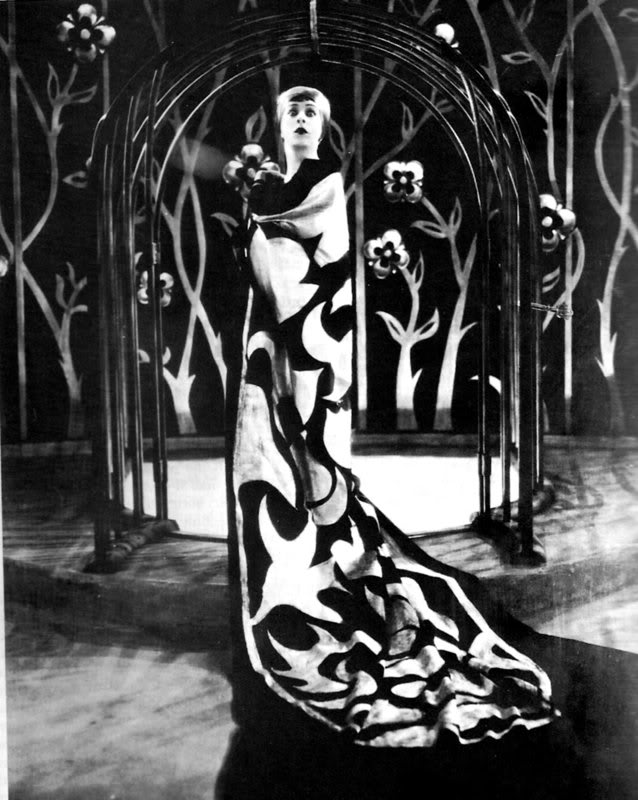
SalomeThis interdisciplinary conference intends to open discussions about the meaning and significance of Aestheticism and Decadence as these movements evolved between 1895 and the mid-twentieth century. Aestheticism and Decadence were not vanquished with Wilde’s imprisonment but, rather, continued as vital and diverse forms in twentieth century aesthetics and culture. Their influence was in some cases openly acknowledged by the authors in question, but often it was oblique and obscured as many later writers, most famously the High Modernists, eschewed any admissions of such a debt.

Image: Alla Nazimova in Salomé (1923)
This conference considers Aestheticism and Decadence from three main angles:

  1. the continuing evolution, diversification and internationalisation of Aestheticist and Decadent ideas and forms;
  2. how writers, artists, critics, musicians engaged with the figures and ideas of nineteenth century Aestheticism and Decadence.
  3. the production of the ‘Yellow Nineties’ and the posthumous representation of Decadent and Aestheticist writers, particularly Wilde and Pater, in memoir, biography and literary criticism


We encourage proposals that address these Aestheticist and Decadent afterlives in the context of their cultural, political and social moments, and which engage with the problematics of these terms.


Subjects might include but are not limited to:


• Decadents and Aesthetes publishing after 1895 (e.g. Machen, Beerbohm, Lee)
• Decadents and Aesthetes who refashioned themselves and are now considered Modernists (e.g. Yeats)
• The concept of ‘art for art’s sake’ in post-1895 literature and art
• The cultural and artistic legacies of fin de siècle decadence in ‘Modernist’ works
• Reappraisals of Decadent tensions such as deviant sensuality and ‘reserve’
• The Decadent/Aesthetic individual in the modern city
• Decadent tropes and characters in the ‘middle-brow’ novel
• Reworkings of Decadent literary forms
• Decadence/Aestheticism on film/in photography
• Decadence/Aestheticism in Music
• Critiques and denunciations of nineteenth century Aestheticism/Decadence
• The influence of and engagement with Aestheticism/Decadence in non-Western cultures
• Decadence/Aestheticism in the United States
• The presentation of Decadents/Aesthetes in monuments, biographies, histories, memoirs.
 

Writers who could be explored within these contexts are legion, but some notable cases include:

• Arthur Symons
• Max Beerbohm
• Arthur Machen
• Victor Plarr
• Ernest Rhys
• Ronald Firbank
• W.B. Yeats
• Thomas Sturge Moore
• Vernon Lee
• T.S. Eliot
• Ezra Pound
• H.D.
• James Joyce
• Edith Wharton
• Evelyn Waugh
• Cyril Connolly
• Ford Madox Ford
• Virginia Woolf
• Christopher Isherwood
• John Betjeman
• Carl Van Vechten
• Ben Hecht
• James Huneker

Please send Abstracts of 250 words with a short bionote to Dr. Kate Hext & Dr. Alex Murray at decadence.modernism2015@gmail.com by the 30th of November 2014.

Categories
CFPs Events Postgraduate Uncategorized

Anna Kavan Symposium – London – CFP deadline 30 April

ies-logologo

CFP: Anna Kavan Symposium

11th September 2014

Institute of English Studies, London

ANNA KAVAN: HISTORICAL CONTEXT, INFLUENCES AND LEGACY

Kavan-paintingAnna Kavan’s publication history spans from her early novels under the name Helen Ferguson in the late 1920s and early 1930s to her last work which won Brian Aldiss’ prize for ‘Sci-Fi Novel of the Year’ in 1967.  Her own life story has been widely reported in magazine articles, book reviews and popular biography, but there has been little serious scholarly attention to her writing.  The often sensationalized focus on Kavan’s biography, particularly her adoption of her own fictional character’s name, her long-term heroin addiction, and her psychological difficulties, has overshadowed serious critical attention to her work.  Yet, her writing continues to be published in English and translation, to hold fascination for new generations of readers, and to interest or influence other writers and artists.  This symposium aims to bring together scholars with an interest in Kavan to promote an increasing academic focus on her work.  The day will be a forum for knowledge sharing, with the broad aims of historicizing Kavan’s work, situating her within the literary and intellectual context of her times, and charting her legacy as a writer.  The symposium will close with a public event in the evening at which leading contemporary writers will discuss Anna Kavan’s work in relation to their own writing. 

The symposium will primarily focus on Kavan’s fictional writing, but also welcomes those working on her biography, her journalism, her little-studied artwork and her philosophical or intellectual influences.  Papers might include the following topics:

  • Comparative readings of Kavan’s fiction with her contemporaries and the authors who have admired her since (e.g. Doris Lessing, J G Ballard, Anais Nin, Maggie Gee).
  • Connections/differences between her writing as Helen Ferguson/ Anna Kavan.
  • High Modernist influences on Kavan’s work.
  • Readings of Kavan’s fiction that historicize her writing in the context of the Second World War, the Cold War and 1960s counterculture.
  • Kavan’s theoretical or philosophical influences.
  • Feminist readings and reassessments of Kavan’s work.
  • Examination of the (post-)colonial aspects of Kavan’s fiction and journalism.
  • Kavan’s engagement with visual cultures, including her own artwork.
  • Studies of Kavan’s use of form (especially the short story) and narrative style (especially her distinctive uses of first and third person narrative).
  • Theories of autobiography and fiction and their impact on the reception of Kavan’s life and work.
  • Kavan’s writing of madness, asylum incarceration and opiate addiction.
  • Kavan’s literary networks (e.g. her friendships with Rhys Davies, Kay Dick, Sylvia Townsend-Warner and others, and her associations with Cyril Connolly and Jonathan Cape).
  • Issues of genre including interpretations of Kavan’s work as ‘Science Fiction’.
  • Kavan’s journalism (in Horizon) and its relation to her fictional writing.
  • Other writers’ engagement with Kavan and the legacy of her work.

Presentations should take the form of 20-minute papers. Please send proposals of no more than 300 words toinfo@annakavan.org.uk by 30 April 2014.  For further information visit http://annakavansymposium.wordpress.com/

Categories
CFPs Events Postgraduate

A Public Modernism/Modernism’s Public – CFP 21 February – Keynote confirmed

A Public Modernism/Modernism’s Public

Friday 9 May 2014

Centre for Studies in Literature, University of Portsmouth

KEYNOTE SPEAKER: Professor Andrew Thacker (Nottingham Trent University)


port

CALL FOR PAPERS

In recent decades modernist studies has seen an explosion of scholarship undermining the myth of modernist isolation from commercialised literary production, with critical attention focused largely on the engagement of modernists with mass markets and popular cultural forms.  Less attention has been given to how mass culture itself responded to and approached modernism. This one-day symposium seeks to explore the two-way relationship between artists and popular audiences; how modernists found a public and how the public also took ownership of modernism.  While modernist writers and artists played with or actively assimilated mass market tactics, the mass markets themselves played with or actively assimilated high modernist techniques.  As mass audiences became increasingly aware of the modernist revolution, modernism not only found its public face, but also met a public increasingly active in refiguring modernism’s profile.  This symposium aims to bring together scholars interested in debating alternative methods of approaching and interpreting interactions between mass markets, popular culture and modernism.
We invite 250-word proposals for 20-minute papers, which might address, but are by no means limited to, the following topics:
  • Approaches to modernism in mass market periodicals
  • Individual modernist writers and the commercial press
  • Mass market publishing and modernist outputs
  • Advertising and modernist design
  • Modernism and celebrity
  • Modernism and fashion
  • Middlebrow culture
  • Methodological issues arising from the study of modernism in mass culture


Please send abstracts with a brief biographical note and full contact details to the symposium organisers, Dr Rod Rosenquist (rod.rosenquist@port.ac.uk) and Dr Alice Wood (alice.wood@port.ac.uk), by 21 February 2014.  Participants will be notified by 1 March 2014.  Any queries may be directed to either of the email addresses above or visit http://www.port.ac.uk/centre-for-studies-in-literature/literature-events/symposium-2014-public-modernism–modernisms-public/
Categories
CFPs Events Postgraduate

CFP: Modernist Criticisms

Modernist Criticisms
Graduate Conference
Saturday 7 June 2014
Centre for Modernist Studies, University of Sussex
Keynote Speaker: Professor Tim Armstrong, Royal Holloway
 
Call for Papers  
 
Our conceptions of modernism are not just informed by its literature. As is widely recognized, essays including Woolf’s ‘Modern Fiction’ and Eliot’s ‘Tradition and the Individual Talent’ provide these writers – and their readers -alternative methods of approaching literary questions and a wider arena within which to expound and explore their theories. But while the critical texts of these canonical figures are well known and studied, work by various minor figures of the period, and this work’s engagement with their artistic concerns, is still frequently overlooked. Many kinds of writing remain marginalized within studies of modernist literature, including work for commercial publications and political movements, for educational instruction, and writing beyond the literary scenes of London and Paris. Research into early twentieth-century literary culture has stimulated important discussions surrounding the production and reception of modernist criticism, including the impact of publishing practices and the professionalization of intellectual pursuits. But this research prompts a need for further enquiry into how critical and creative writing in this period are mutually engaged with these cultural contexts in view.
 
This graduate conference aims to develop debates on the intersections between criticism and literature in modernist culture. It also aims to integrate recent research on the literary culture of modernism with the study of both canonical and non-canonical critical texts. Papers are especially welcome on marginal or marginalized critics and criticism. Submissions are invited on topics including but not limited to:
 
• creative practice as critical practice and vice versa 
• modernist notions of taste, highbrow culture, the avant-garde
• critical audiences: universities, magazine readership, literary groups, the reading public, etc.
• British critical traditions: Hazlitt, Arnold, Pater, Eliot, Leavis, etc.
• the essay genre
• modernists criticizing modernists: factions, coteries and disputes
• critical localities: transatlantic and continental criticism, literary scenes, salons, etc.
• originality as an aesthetic criteria
• criticism as it in surfaces in other genres: letters, memoirs, life-writing, etc.
• the professional or dilettante critic
• modernist criticism relating to gender, class, race and sexual identities
• criticism, manifestos and artistic movements
• the influence of science, empiricism, sociology
• comparative and interdisciplinary critical practices
 
The conference is specifically aimed at graduate students and early-career academics, and encourages interdisciplinary exchanges. Abstracts of around 250 words in length for twenty-minute papers, along with a brief biographical note, should be submitted viamodernistcriticismsconference.wordpress.com by 7 March 2014.
Categories
CFPs Events Postgraduate

EAM 2014 ‘Utopia’ – deadline extension

‘Utopia’

The deadline for abstract submission to the 4th EAM conference in Helsinki, 29.-31. August 2014, has been extended to 5 February. At that time we will close!

http://www.eam2014.com/

Categories
CFPs Events Postgraduate

CFP: David Jones: Christian Modernist?

David Jones: Christian Modernist?
Oxford, 10-13 September 2014

‘Modernism’ in literature and the arts is associated with cultural and political rebellion, ‘making it new’ through formal experimentation, and a widespread drive towards a regenerated New Era of human history. For many modernists, Christianity stood for a bygone era to be overcome; the reactionary, dead hand of the past.

Yet David Jones’s art, poetry and cultural theory subvert this neat dichotomy. He was a Catholic convert with a deep appreciation of the Church’s ancient liturgy and tradition; but he also conceived his Catholicism as a mode of cultural ‘sabotage’ and a sign of ‘contradiction’. His art and poetry is palimpsestic and fragmentary, inspecting ruins and traces, endlessly fascinated by dense, half-inaccessible layers of meaning stretching back through past cultures into the pre-history of human sign-making. Yet his theory of human culture as sign-making centres on Christ’s entry into the world of signs, epitomised in the Eucharist. Jones saw himself as living in an epoch in which man’s vocation as artist was being twisted out of shape by a technocratic, capitalist civilization obsessed with utilitarian means and ends. The modern artist therefore was a Boethius, shoring up the surviving fragments of the past to make a bridge into a different, regenerated future; a vision which helped Jones to assimilate a wide range of experimental modernist work which, like his own, looked both backwards and forwards at the same time.

This conference will examine the paradox of Jones the ‘Christian modernist’. Does the very concept of cultural ‘modernism’ perhaps need reassessment when confronted with his example? How is his experimental art, poetry and cultural theory relevant to theology? How does his work relate to the theological controversies of his day, especially the ‘modernist crisis’ within the Catholic church and beyond? How does the influence of other modernist art, theory and literature interact with Christian influences (whether theological or artistic) in his work? What was Jones’s influence upon other thinkers and creative artists, both those who shared his religious views, and those who did not? And is his complex vision of human beings as makers and artists who participate in divine creativity through their sign-making – while also hiding this from themselves – still relevant today? Or should it rather be analysed as a product of its time, an unfortunate idealisation that at one point even led Jones to affirm a limited sympathy for the ‘fascist and Nazi revolutions’?

It is the aim of this conference to confront the paradoxes and pleasures of reading and studying Jones head-on, in order to refine and extend our critical vocabulary to encompass an artist and thinker who continues to challenge our preconceptions. Finally, perspectives that challenge the fruitfulness of the whole idea of Jones as ‘Christian modernist’ are also welcome. Are there reasons for steering clear of both terms? Is Jones’s work perhaps better seen as transcending or collapsing such categories?

Contributions are welcome not only from Jones specialists, but also from across modernist studies, theology, religious studies, philosophy, art history, intellectual and political history, aesthetics, poetics, and genetic manuscript studies.

For more information visit:http://modernismchristianity.org/david-jones-conference/

Categories
CFPs Events Postgraduate

CFP Clothes, Working Lives, and Social Change, 1880-1939

Call for Papers: Clothes, Working Lives and Social Change, 1880–1939

(Bishopsgate Institute, London 12–13 September 2014)

Two-Day International Conference

Confirmed Keynote Speakers:

Professor Eugenia Paulicelli (Queen’s College and The Graduate Center, City University of New York)

Professor Lou Taylor (University of Brighton)

This cross-disciplinary conference explores the relationship between work, clothes and social change at the turn of the twentieth century.

During the long nineteenth century mechanized manufacturing, accelerated modes of production and innovative trades and industries created employment possibilities for an increasingly professionalized workforce. While factory and clerical workers, shop girls and other members of a newly established workforce faced changing working hours and environments, a transformation of clothes paralleled this revolution in trades and industries. New vocations required new vestments at a time when the affordability of mass-produced clothing launched the ready-to-wear industry. Social mobility expressed itself in new sartorial patterns and specific uniforms or dresses became the markers of professional identity and social mobility. At the turn of the twentieth century the histories of dress and labour shared many common Hosted by the Bishopsgate Institute in London’s East End, this interdisciplinary conference brings together scholars from the Humanities, the Social Sciences and the Creative Arts who have research interests in the intersecting histories of clothes and labour at the turn of the twentieth century.

Topics include but are by no means restricted to:

 Sweated Labour and the Clothing Industry

 Clothes and the New Workforce (especially working women)

 Work in the Fashion Industry (seamstresses, models, designers)

 Haute Couture versus Ready-to-Wear Garments

 Film Stars, Celebrity Culture and Clothes

 Textiles and Communities of Immigrant

 Workers (particularly London’s East End)

 Uniforms

 The Politics of Fashion and the Coding of Clothes

 Clothing, Work and Consumption (especially in times of war)

 Work and Rural Dress

The conference organizers invite paper proposals of 300 words by 30 April 2014. Please email abstracts to tailoredtrades@exeter.ac.uk. We invite abstracts from scholars at all career stages and are particularly interested in receiving proposals from textile curators who work on projects related to turn-of-the-century fashion and design.

This conference is part of a series of research events on the interconnected histories of clothes and labour funded by the AHRC Connected Communities programme: http://tailoredtrades.exeter.ac.uk/.

Categories
CFPs Events Postgraduate

CFP: Finite, Singular and Exposed: Who’s Afraid of the Modernist Individual?

Finite, Singular and Exposed: Who’s Afraid of the Modernist Individual?

University of Córdoba (Spain)
30-31 October, 2014

There was a time when the individual was the central category in modernism. It was a time of quasi-blind reliance on the Hegelian oppositions self-versus-reality and self-versus-society, critical talismans tirelessly employed by Marxist critics from Lukács through Goldmann. In fact, Lukács’s censorious construal of the modernist novel as an anomalous form bound to stage the individual “confined within the limits of his own experience” remained an article of faith for various generations of critics. Admittedly, that time is up. The old focus has been replaced by a new emphasis on community and communal determinations of individuality in new Modernist studies. What Mao & Walkowitz called “the transnational turn” is an adept symptom of this critical tendency, also present in works by Jessica Berman, Elleke Boehmer, Kim Worthington, Laura Doyle, and Walkowitz herself. This new turn is, moreover, inextricably involved with postcolonial and feminist approaches to Modernism, and expands the traditional psychoanalytic perspectives on the modernist self as an isolated mind. What is at stake is no longer the anti-social de-affiliation of the male Western subjectivity (Marcel, Joseph K., Lord Jim, Leopold Bloom, Gustav von Aschenbach), but rather the compensatory affiliation of repressed minorities (gendered, racial, sub-national, artistic) within a differential spectrum of communal possibility.

And yet, we believe, the ghost of the individual has never been fully exorcised. The Lukacsian dialectical operators remain, often latent, in most current accounts of high and late modernist fiction. We believe that this latency is dangerous, for it promotes an a-critical resumption of the notion of the individual, shorn of its dialectical—and potentially metaphysical—valences. In the context of the recent wave of dialectico-metaphysical approaches to subjectivity and individuality encouraged by thinkers like Fredric Jameson, Slavoj Zizek, Jean-Luc Nancy and Alain Badiou, a fresh re-definition of the modernist individual is manifestly in order, a re-definition that is likely to enrich the psychoanalytic scope recycled by trauma-studies for modernist studies. We thus propose a tentative return to the theoretical articulation of modernist individuality. This return is not to be conceived as an antagonistic response to community-oriented approaches to modernist fiction, but rather as an attempt to complement it through a dialectical counterweight.

The organizers welcome proposals for 25-minute papers in English on canonical Modernist authors (Conrad, James, Joyce, Woolf, Ford, Lawrence, Mansfield, Stein…) as well as on non-canonical and late Modernists. Although our main focus will be on English-speaking writers, comparative approaches exploring the work of non-English speaking Modernists will also be welcome.

Suggested paper topics may include, but are not limited to:

– Jean-Luc Nancy’s metaphysical categories of individuality: singularity, finitude, exposure.
– Alain Badiou’s faithful subject. Slavoj Zizek’s ticklish subject.
– Giorgio Agamben’s bare life. Judith Butler’s precarious life.
– Attridge’s singularity and the otherness of modernist writing: implications for a re-reading of the modernist subject.
– Individual, subject, character: Displacements and re-evaluations.
– Individuality and “life-writing.”
– Traditional communal determinations of individuality: Race, gender, class, nation as categories of communal affiliation.
– Enfranchisement, citizenship and national/sub-national/transnational affiliation.
– The artistic subject: The myth of bohemia and the Künstlerroman.
– Displaced subjects: Exile, migration and deterritorialization.
– Regressive subjectivation: Archaic utopias and pastoral communities.
– The singularities of Modernism.
– The Modernist body: Vulnerability, precariousness, corporeity and finitude.
– The Modernist mind: The ‘inward turn’, introversion and dehumanization.
– The isolated subject: Immunity and risk societies.
– The cosmopolitan subject.
– Subject to sacrifice: The Modernist scapegoat.

Please submit your 400-500 word abstracts by June 15th, 2014 to Julián Jiménez Heffernan (jsjimenez@uco.es) and Gerardo Rodríguez Salas (gerardor@ugr.es). Abstracts should include a short biographical note.

Selected papers will be considered for publication.

Confirmed keynote speaker: Prof. Derek Attridge (University of York, UK)

Deadline: June 15th, 2014.

Registration fee: 35€

Organizers: Julián Jiménez Heffernan, María Jesús López, Paula Martín Salván, Gerardo Rodríguez Salas, Pilar Villar Argáiz, Mercedes Díaz Dueñas, Juan Luis Pérez de Luque.