With the call for papers extended, there’s still time to find a panel for this year’s Modernist Studies Association conference, to be held August 10-13 in Amsterdam.
Not sure who to approach? Try some of the suggestions below.
 British Association for Modernist Studies - Website Designed and Developed by Callum Leith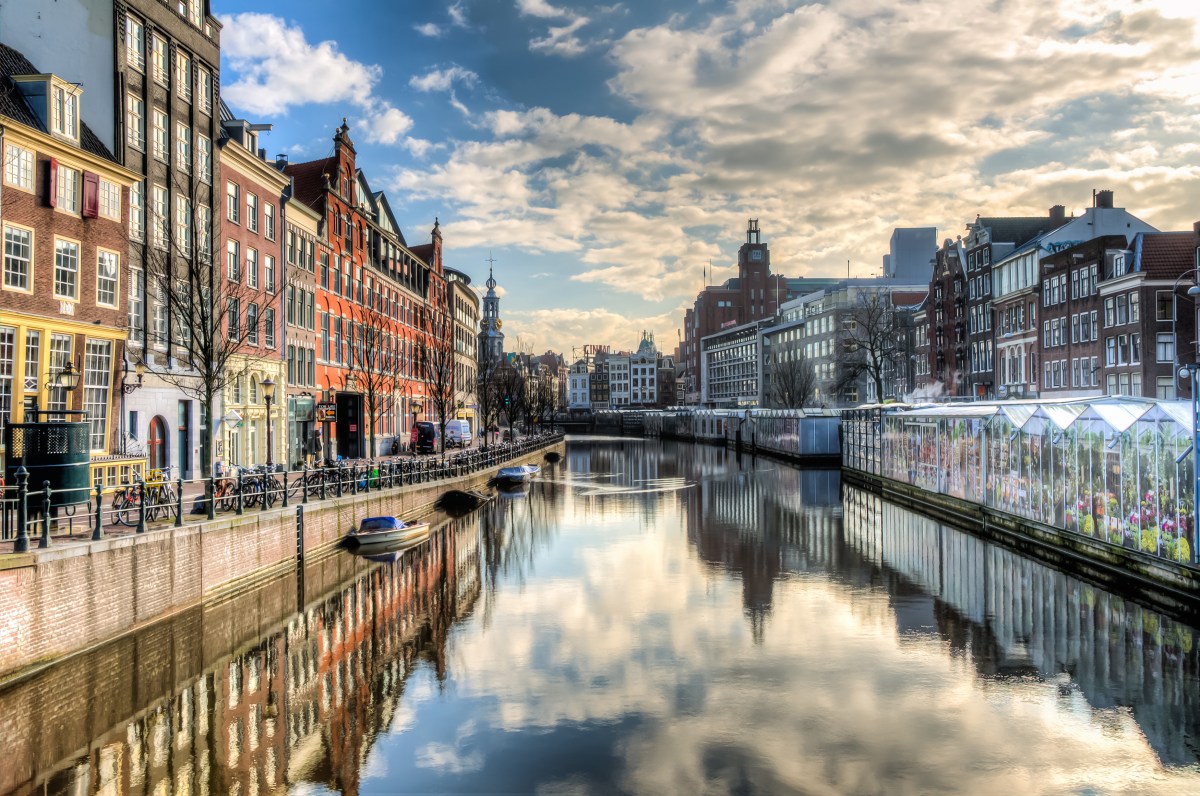
With the call for papers extended, there’s still time to find a panel for this year’s Modernist Studies Association conference, to be held August 10-13 in Amsterdam.
Not sure who to approach? Try some of the suggestions below.
The call for papers is now live for Remaking the New, to be held at Queen Mary, University of London on the 13-14 July, 2017.
We are pleased to publish the programme for New Work in Modernist Studies, Saturday 10 December 2016, 10am-6:30pm, hosted at ArtsOne Building, Queen Mary University of London.
10:00-10:30 Registration and Coffee
10:30-11:45 Panels
1. Unfinished Work: Drafts, Archives, Paratexts
Chair: Sophie Oliver
Chloe Oram (Chichester), ‘Ottoline in the Archives: Shedding Light on Modernism’s Undervalued Muse and Patron’
Katie Jones (Nottingham), ‘Author, Reviewer and Translator: Katherine Mansfield’s Place in Literary Culture’
David Miller (Birkbeck), ‘Redrafting, Maintenance and Temporality in the Late Poetry of Djuna Barnes’
Ruth Clemens (Leeds Trinity), ‘The “Feeble Translations” of The Waste Land ’s Paratexts’
2. Moderns and Unmoderns
Chair: Helen Carr
Mick Sheldon (QMUL), ‘Discarded Imagist: The Life, Work, and Reputation of Allen Upward’
Hannah Scragg (Keele), ‘Socio-political engagement and formal experimentation: Bennett, the Great War, and the General Strike’
Rosemary Walters (Kent), ‘Charles Causley: Moderation, Movement and Modernism’
Alex Grafen (UCL), ‘The Whitechapel Boys and Little Magazines’
11:45-13:00 Panels
3. Knowledge, Self-Knowledge and Spectacle
Chair: Stephanie Boland
Seán Richardson (Nottingham Trent University), “I really don’t exist”: Queer (auto)biography and the fragmented self in Christopher Isherwood’s Goodbye To Berlin (1939)
Katharina Boeckenhoff (Manchester), ‘Travelling Intimately with Barnes: Ways of Knowing in her New York Articles’
Ana Tomcic (Exeter), ‘Gods and Goods – Psychoanalysis, Evolution and the Cinema’
Adam Cuthbert (Dundee), ‘Cinematicity and the Spectacle of Memory in Modernist Fiction’.
4. European Connections
Chair: Scott McCracken
Abigail Richards (RHUL), ‘The Marvellous in Leonora Carrington’s and Gisèle Prassinos’s writings’
Eirini Apanomeritaki (Essex), ‘Insect transformations in the short fiction of Franz Kafka and Vladimir Nabokov; an exploration of human-animal subjectivity’
Frances Reading (Kent), ‘Olive Garnett and Anglo-Russian Cultural Relations from the Crimean War to the Russian Revolutions’
Natalia Ciofu (Essex), ‘Hybrid Modernism in Ciuleandra by Liviu Rebreanu’
13:00-14:00 Lunch and BAMS AGM
14:00-15:15 Panels
5. Bodies, Affect, Aging
Chair: Helen Saunders
Imola Nagy-Seres (Exeter), ‘”[A]nd there is a sort of peace”: moments of delight in D. H. Lawrence’s Women in Love ‘
Eret Talviste (Northumbria), ‘Affect and its relation to ethics, aesthetics and politics in modernist fiction’
Yasutaka Kabuto (RHUL), ‘Aesthetics of Reduction: Falling Fertility and Aging Society in Virginia Woolf’s Novels’
Rosie Barron (Glasgow), ‘Embodied Travelling: Samuel Beckett and the Incarnation of Motion’
6. Intermedial Modernism
Chair: Morag Shiach
Sue Ash (Oxford Brookes), ‘Kinaesthetic Empathy in Isadora Duncan’s dance and in artists’ responses to her dance’
Charlotte Whalen (QMUL), ‘”Anglo-Mongrels and the Rogue”: Mina Loy’s decorative modernism’
Lara Ehrenfried (Durham), ‘Early Sound Film and the Late Modernist Novel: Patrick Hamilton’s Hangover Square (1941)’
Christopher Gerrard (Dundee), ‘Méliès to Man Ray: The Cinema of Attraction as Precursor to the Cinema of the Avant Garde’
15:15-15:30 Coffee
15:30-16:30 Panels
7. Mathematical Modernism
Chair: Tim Armstrong
Daniel Cartwright (Westminster), ‘The Oulipo and Mathematical Form in Literary Composition’
Zoe Gosling (Manchester), ‘Modernism and Mathematics’
Catriona Livingstone (KCL), ‘Eye-Beams and Interference Patterns: Quantum Physical Experiments in Virginia Woolf’s The Waves ‘
8. The Politics of Fiction / the 1930s
Chair: David Ayers
Chris Doyle (Sheffield Hallam), ‘Literary Criticism and Genre Fiction in the 1930s: The Left Review Perspective’
Amy Olivia Hurle (Queen’s University, Belfast), ‘Woolf and the Middle-Brow’
Teresa Sanders, ‘Alternative Forums, Subversive Identities: Education and Pedagogy in the Works of Sylvia Townsend Warner, 1926-1954.’
16:30-17:30 Keynote
Sascha Bru (MDRN, University of Leuven), ‘Are we Modernists Yet? Avant-Garde,
Temporality, History’
17:30-18:30 Reception
The call for papers is now open for Ian Hamilton Finlay: Little Fields, Long Horizons, a symposium which will take place next year at the University of Edinburgh on July 13 and 14, with an associated event at Little Sparta on July 15.
Submissions are due by March 10. The conference is supported by the British Academy.
About the conference
This two-day symposium will explore new critical and interdisciplinary perspectives on the Scottish poet, artist and avant-gardener Ian Hamilton Finlay (1925-2006). As Finlay’s reputation worldwide continues to grow a decade after his death, we wish to ask searching questions about the boundaries of his practice, its philosophical, political and cultural dimensions, and its legacies and affinities across a range of media, disciplines and geographical boundaries. A number of attendees will also have the chance to visit Finlay’s poet’s garden at Little Sparta in the Pentland Hills for an event in its new workshop space.
Keynotes: Susan Stewart, Princeton University
Stephen Bann, University of Bristol
Drew Milne, University of Cambridge
Topics for discussion include, but are not limited to:
Finlay and late modernism(s)
Little Sparta and ecology
Finlay and poetics, including objectivist/concrete/visual/new-media poetics
Finlay and visual/conceptual art
Finlay in context: encompassing movements/milieus/cultures; associated figures
Finlay and the political, including Finlay as revolutionary/counter-revolutionary, Finlay and the French Revolution, Finlay and the Third Reich
“Flytings” and “Battles” as aspects of avant-garde practice
Finlay as collaborator/Finlay’s collaborators
Finlay and European romanticism
Finlay and the (nuclear) sublime
Neo-classical and pre-Socratic re-armaments
Finlay and (inter)nationalism
Finlay and Northern Renaissances
Wild Hawthorn Press and small-press publishing as creative practice
Finlay and landscape architecture/garden design
Ongoing and contemporary creative responses to Finlay’s work
250-word abstracts for twenty-minute papers and 500-word abstracts for full panels/round-tables will be accepted by the organisers Greg Thomas and Alex Thomson at Greg.Thomas@ed.ac.uk until 10th March 2017. However, participants are asked to respond with expressions of interest as soon as possible. For up-to-date event and attendance fee details visit our website.
Today is the last day to register for New Work in Modernist Studies, BAMS’ postgraduate conference.
There is a conference registration fee of £15 for BAMS members and £25 for non-BAMS members, including lunch, coffee and a wine reception at the end of the day. Membership of BAMS is now available for 2017 and will entitle you to discounted rate for NWiMS 2016 (2016 members will also qualify for the discount). Memberships cost £45 (£32 student rate) per annum (including hard copies of Modernist Cultures) and £28 (£23 student rate) per annum (online access to the journal only).
As well as the discounted rate for NWiMS, new and renewing members of BAMs will receive:
• A print subscription to Modernist Cultures which is published three times a year
• Online access to Modernist Cultures
• Free or reduced access to all BAMS events including postgraduate training days, conferences, and the ‘New Work in Modernist Studies’ graduate symposia
• Access to members-only content on the BAMS website, including training resources and publisher discounts
• Eligibility for entry to the new BAMS essay prize for early career researchers
Please contact Suzanne and Jade at nwims2016@gmail.com if you have any questions about the conference.
The call for papers is now open for Alphonse Legros in France and in Britain: A Tale of Two Countries, an international conference to be held at the University of Burgundy and Museum of Fine Arts, Dijon, on May 4-5, 2017.
About the conference
Although he was born and possibly taught in Dijon, Alphonse Legros spent most of his life in Britain where he was appointed professor at the Slade School of Fine Art in 1876. Legros held the position until 1893, introducing etching and, later, sculpture to the syllabus. In 1880, he was one of the six founding members of the Society of Painter-Etchers which was to play an influential role in the late Victorian revival of printing. He was also instrumental in the modern revival of the cast portrait medal. When he died in 1911, Legros was a British citizen and a distinguished artist. The Tate Gallery organized the largest-ever retrospective of his works. However Legros did not forget France, nor did France forget him: a one-man show was held at Samuel Bing’s L’Art Nouveau gallery in 1898, and a large retrospective exhibition was curated by Léonce Bénédite at the Musée du Luxembourg in 1900. In Dijon, the Musée des Beaux-Arts set up an exhibition in 1987 and recent smaller events in France testify to an enduring interest for this transnational and transmedia artist.
The conference organized at the University of Burgundy (Dijon) in May 2017 by the Centre Interlangues (Texte-Image-Langage) and the Musée des Beaux-Arts will revisit Legros’s work and role as well as his legacy and reception in the 20th and 21st centuries.
Conference convenors
Sophie Aymes, University of Burgundy
Bénédicte Coste, University of Burgundy
Bertrand Tillier, University Paris 1 Panthéon-Sorbonne
Keynote Speakers
Elizabeth Prettejohn, University of York
Stephen Bann, University of Bristol
Submissions
We invite art historians, specialists of Victorian visual culture and aesthetics, curators, collectors and art school teachers to send proposals for 20-minute papers that explore the following themes in this non exhaustive list:
Please send a 300-word abstract and a short biography before 1st January 2017 to:
Sophie Aymes: sophie.aymes@u-bourgogne.fr
Bénédicte Coste: benedicte.coste@u-bourgogne.fr
Bertrand Tillier: bertrand.tillier@univ-paris1.fr
Notification of acceptance: 15th January
Professor Tyrus Miller (University of California-Santa Cruz) will give a lecture entitled From Avant-Garde to Architecture (and Back) at the Institute of English Studies, London, at 18:00 on November 21.
About the paper:
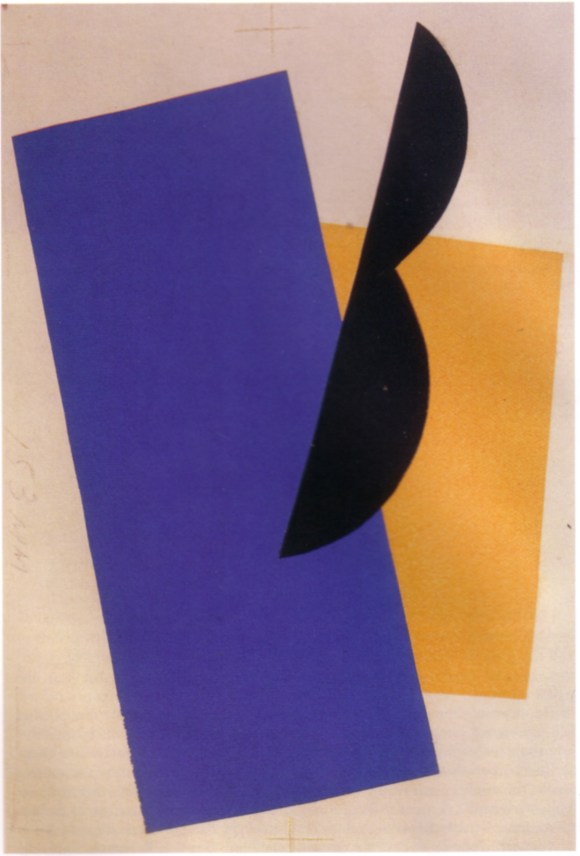
This paper considers the complex interactions of the historic avant-gardes with the symbolic idea, theory, and practice of modern architecture. Considering a number of cases including Malevich, Mondrian, Van Doesburg, Lajos Kassák, Moholy-Nagy, and El Lissitzky, I will discuss and assess Reyner Banham’s classic hypothesis that the avant-gardes played a crucial role for modern architecture in providing an “aesthetic discipline,” from outside of the architectural discipline, to make sense of various technical innovations, new materials, and emergent idioms of design. At the same time, for several avant-gardists architecture was invested with the dream of reinventing a totality lost among the multiplicity of incommensurable metropolitan sign-systems and forms: as a kind of utopian meta-art in which the autonomous languages of the various art-media, and even various extra-artistic dialects and functional idiolects, might be subsumed into a new, architectonic metalanguage assuring inter-translatability and social efficacy.
Tyrus Miller is Professor of Literature at the University of California at Santa Cruz. He is author of Late Modernism: Politics, Fiction, and the Arts Between the World Wars (U of California P, 1999); Singular Examples: Artistic Politics and the Neo-Avant-Garde (Northwestern UP, 2009); Time Images: Alternative Temporalities in 20th-Century Theory, History, and Art (Cambridge Scholars Publishing, 2009); and Modernism and the Frankfurt School (Edinburgh UP, 2014). He is the editor of Given World and Time: Temporalities in Context (Central European UP, 2008) and the Cambridge Companion to Wyndham Lewis(Cambridge UP, 2016). He is the translator/editor of György Lukács, The Culture of People’s Democracy: Hungarian Essays on Literature, Art, and Democratic Transition (Brill, 2012) and series co-editor of Brill’s Lukács Library series.
Event details:
Senate House, Malet St, London, Room 246, 18:00 – 20:00
The event is free, but registration is required to ensure there’s room!
Please register your participation by contacting the Seminar convenor, Dr Angeliki Spiropoulou, Visiting Research Fellow at IES/SAS and Assist. Professor at Peloponnese University at angeliki.spiropoulou@sas.ac.uk
The call for papers is now live for Austerity Gardens, an essay collection to be edited by Dr Naomi Milthorpe.
About the collection:
The editor seeks 500-word proposals for submission to an edited collection devoted to the politics and poetics of austerity gardening in literary and material cultures in the Anglophone world from the Second World War onwards.
Austerity gardening encompasses a diversity of places, spaces, practices, and actors: from suburban allotments to country house gardens, Victory diggers to urban foragers. Gardens are liminal spaces, private zones, and contested sites, mobilized against foreign invaders whether human or nonhuman. Gardens and gardening are gendered, and in place and practice revelatory of shifting, contingent, and multiple modes of gender and sexual identity. They are idealized, yet ever-incomplete, utopian sites. Gardening is also big business, with global market reports indicating increased demand for DIY products worldwide in the decade since the global financial crisis. Thus gardening and garden literature proffers rich soil for understanding the commodifications and uses of culture, whether highbrow or popular, in the mid-to-late 20th century and beyond.
Following the global financial crisis, there has been a parallel burgeoning scholarly interest in austerity. As Rebecca Brammall suggests, the discourses of austerity articulate a range of ideological, cultural, economic and social agendas. Most significant, however, is the way in which the agendas of austerity – many of them expressed in terms of utopian/dystopian anxieties about the self and society – are mapped upon representations of wild and human landscapes. Responses to austerity develop from a relationship with the environment; these responses in turn renovate the ways in which these spaces and places are imagined in literature and the arts from the Second World War onwards.
Landscape is material, but it is also as Denis Cosgrove argues a “cultural concept” and “way of seeing”. Nowhere is this more apropos than the garden, a pre-eminently human landscape in which desire and identity is embedded, nurtured and reflected. The garden is a site of nature and culture, an art which in the words of The Winter’s Tale“itself is nature.” Though the country house and pastoral traditions represent the garden as an unchanging, aristocratic, leisurely “green and pleasant land”, austerity seeks to reimagine the backyard as a dynamic, democratic space of self-sacrifice and toil.
From these roots sprout a range of interdisciplinary topics and questions related to austerity gardening. From the “Dig for Victory” campaign to contemporary cultures of ethical consumption, green living and gardening as entertainment, this collection invites proposals for readings of literature, film, visual arts, crafts, media, and cultural history, in order to explore the ways in which gardening is mobilised to contest and celebrate discourses of austerity, ethics, and responsibility in the Anglophone world from the Second World War to the present day. Chapters are invited on topics including, but not limited to:
For queries or to submit a proposal, please contact the editor at Naomi.Milthorpe@utas.edu.au
The Beckett at Reading team is happy to announce the following events, which will take place during Beckett Week 2016 at the University of Reading. Please note that registration is necessary for all events.
Lisa Dwan: ‘A Beckett Actor’
The Billie Whitelaw Lecture (Wednesday 2 November, 6pm)
Minghella Building, Whiteknights Campus, The University of Reading
Student / Unwaged: £2
Waged: £5
Acclaimed Beckett actress, Lisa Dwan, who has performed in Beckett’s plays across the globe, will speak about performing in Beckett and about her mentor Billie Whitelaw, Beckett’s favourite actress. Lisa met Billie when she was preparing for a production of Beckett’s challenging play, Not I, and Billie passed her notes from Beckett on to Lisa. We are delighted to welcome Lisa Dwan back to Reading, following her virtuoso performance of a selection of Beckett’s prose for performance entitled No’s Knife at London’s Old Vic Theatre.
The lecture will be followed by a Wine Reception, and the Launch of the Billie Whitelaw Exhibition, which will for the first time show items from Billie Whitelaw’s Beckett Theatrical Collection, acquired by the Beckett International Foundation last year.
> Registration and Details: http://store.rdg.ac/LisaDwan
Beckett and Politics Conference
(Thursday 3 – Friday 4 November)
Minghella Building, Whiteknights Campus, The University of Reading
UoR Student: £10 (1 day); £20 (2 days)
Student / Unwaged: £25 (1 day); £40 (2 days)
Waged: £35 (1 day); £50 (2 days)
Organised by the Beckett at Reading Postgraduate Group (BARP), the exciting theme of ‘Beckett and Politics’ will be discussed through panel topics ranging from capitalism and postcolonial Ireland to the politics of gender, sex and violence, and keynotes by Matthew Feldman, Elizabeth Barry and Daniela Caselli. All scholars, students, and enthusiasts are welcome. The provisional schedule and other information can be found here.
> Registration and Details: http://store.rdg.ac/SamuelBeckettandPoliticsConference
The Gerald Finzi Memorial Lecture: ALICE OSWALD
(Friday 4 November, 6.30pm)
L022 Lecture Theatre, London Road Campus, The University of Reading
All delegates: Free entry
As part of the Reading Literature Festival 2016, critically acclaimed poet Alice Oswald will deliver the Gerald Finzi Memorial Lecture and give a reading of her poetry. After the lecture there will be a drinks reception in the Museum of English and Rural Life. This annual lecture was established in memory of the composer Gerald Finzi (1911-56), who lived in Newbury and had a close connection with Reading. His extensive collection of English literature is now held in the University’s archive.
> Registration and Details: http://www.store.reading.ac.uk/browse/extra_info.asp?compid=2&modid=1&catid=247&prodid=3059
Mary Bryden Tribute Day
(5 November, 12-7pm)
Minghella Building, Whiteknights Campus, The University of Reading
All delegates: Free entry
A tribute day for the late, much loved Mary Bryden, Professor of French Studies at the University of Reading, and Co-Director of the Beckett International Foundation, who died a year ago. The day will start (at 12 noon) with a lecture by Emeritus Professor Jim Knowlson on Beckett and Billie Whitelaw. In the afternoon, there will be an academic panel which will reflect on aspects of Mary’s research in French Studies and Beckett Studies. This will be followed by personal and musical tributes from Mary’s colleagues and friends, and readings from Mary’s own creative writing. The event is free and will include lunch and a drinks reception at the end of the day.
> Registration and Details: http://store.rdg.ac/MaryBrydenTributeDayEvent
The Call for Papers is now live for Beyond Genius and Muse: Collaborating Couples in Twentieth-Century Arts, to be held at the University of Bristol in April 2017.
Abstracts are required by December 16.
About the conference
Examining collaborating couples can force us to rethink the paradigms of working relationships in the arts; especially those of the twentieth century, where ideas of genius and muse are in total flux. Whether couples collaborated or hindered each other, what are the means to describe such complex creative partnerships? How can feminism, gender theories, and queer studies help shift perceptions and rediscover hidden powers and intimate connections? What methodologies can we use to research and write about intra-art and interdisciplinary couples? How do such couples perceive themselves and their work? This conference seeks to engage with all kinds of collaborating couples, be it cases where traditional roles are intact, reversed, or changed otherwise.
Keynotes
Prof. Frances Spalding CBE, FRSL
Anthony Payne & Jane Manning OBE
Suggested topics
Muses vs. geniuses in creative partnerships
Related isms: feminism, modernism, post-modernism, etc.
Queer perspectives
Methodological challenges (biography, comparative biography, life writing, archives and legacies, constructs like Michèle LeDoeuff’s ‘Heloise complex’, etc.)
Challenges in interdisciplinary partnerships/approaches
Collaboration and obstruction in partnerships
Partnerships between creative artists (writers, poets, fine artists, composers, performers, etc.) and ‘enablers’ (editors, gallerists and dealers, critics, conductors, etc.)
How to submit
Proposals can be for 20-minute individual papers or 90-minute collaborative panels or lecture-recitals of max. 90 minutes. Proposals should not exceed 300 words, biographies (optional) 150 words. Please submit your proposal on the website. If you would like to compete for one of three postgraduate travel bursaries, please identify yourself as a postgraduate student in your proposal.
Conference fees, details on registration and the conference dinner will be posted on the website.
Organiser and Programme Committee
Dr Annika Forkert (Organiser; University of Bristol)
Dr Adrian Paterson (NUI Galway)
Dr Sarah Terry (Oglethorpe University)
Dr Tom Walker (Trinity College Dublin)
Contact
Please email collaboratingcouples@yahoo.co.uk
 British Association for Modernist Studies - Website Designed and Developed by Callum Leith