Categories
CFPs Postgraduate

CFP: Olive Moore: Modernist Extraordinaire

CFP:  Olive Moore: Modernist Extraordinaire

Deadline for Abstracts: March 1, 2015.

             We invite submissions for a volume of essays on English modernist Olive Moore. Today Moore is scandalously under-read, but between 1929 and 1934 she published three brilliant novels—Celestial Seraglio (1929), Spleen (1930), and Fugue (1932)—as well as a dazzling and caustic collection of aphorisms on modern culture, art, nationality, religion, and sexual difference titled The Apple is Bitten Again (1934). During this period Moore worked as a journalist for London’s Daily Sketch, publishing articles under her real name, Constance Vaughan, on a diverse range of topics such as child rearing, fashion, politics, gossip, interior design, public monuments, and modern art. The editors seek papers on any aspect of Moore’s work, particularly with a view to the following: What is the rationale for recuperating an experimental writer such as Moore now? On what basis can we formulate an approach to her work that is relevant to contemporary concerns within modernist studies? How do we talk about her writing in this transnational, global, and post-identitarian age? How might the following categories help us to situate Moore’s writing: disability studies, queer theory, new materialisms, feminist aesthetics, periodical studies, animal studies and/or the politics of affect? This volume will be the first published collection on Olive Moore’s work. Ashgate Publishing has expressed preliminary interest.

Please submit 500-word abstracts and short CVs to Jane.Garrity@Colorado.edu and Renee Dickinsonrenee@r-n-r.org by March 1, 2015.

For preliminary e-mail inquiries, please include “Olive Moore” in the subject line.

Completed essays (7,000 words) will be due March 1, 2016.
Categories
Postgraduate

Doctoral Funding Opportunities in Literature (University of Brighton)

There are currently funding opportunities for students wishing to pursue
PhD studies at the University of Brighton. These are the Doctoral Training
Partnership studentships (TECHNE), which require students to work with
partner organisations during the writing of their thesis, and the
University of Brighton studentships, which focus students on the thesis
alone. Both schemes offer fully-funded doctoral studies (stipend and fee
waiver). The deadline for applications to the TECHNE scheme is 23 January
2015 and successful applicants will commence study in October 2015.

For further information on the schemes and details about how to apply see:
http://arts.brighton.ac.uk/research/doctoral-centre-arts/studentships

The Literature team welcomes applications on a wide range of subjects from
the Early Modern period to Twenty-First Century literature. For an outline
of the team’s interests, see:

http://arts.brighton.ac.uk/study/english-literature-studies-brighton/phd-literature-brighton

Applicants are advised to contact potential supervisors to gain advice on
developing the proposal before submission.

For further information contact Dr Andrew Hammond at
A.N.Hammond@brighton.ac.uk

Categories
Postgraduate

Open Modernisms Project

Open Modernisms

Recently there have been discussions among Modernist Studies Association members about the lack of an ideal anthology of modernist primary sources for use in the classroom. While many of the texts we frequently teach are now out of copyright and are available online through Project Gutenberg, Google Books, and other digitisation initiatives, there remains no systematic way for lecturers to gather these materials, ensure that they are reliable texts, and distribute them to students. Open Modernisms is a collaborative effort on the part of modernist scholars to make out-of-copyright texts available for teaching. The freely available resource will allow lecturers and students to access and curate a customizable selection of essays and manifestos by modernists about modernism. The resource will focus first on “primary secondary” materials — works like Woolf’s “Modern Fiction,” and Pound’s “A Retrospective.” The editorial board will implement a rigorous process to ensure that readers can access full bibliographic details, and the team will also have checked that the texts are accurate representations of the source editions. The texts will be available to read online and to print for classroom use. We hope to have the resource ready in time for use in teaching courses that begin in Fall 2015.

If you would like further information about the project (including technical specifications) or would like to participate either by undertaking editorial work or by sharing scanned copies of modernist sources with the team, please contact Claire Battershill (c.d.battershill@reading.ac.uk).

Dr. Claire Battershill

SSHRC Postdoctoral Fellow
Department of English
University of Reading
http://www.clairebattershill.com

Categories
Events Postgraduate

Modernist Magazines Research Seminar – Tuesday 9 December

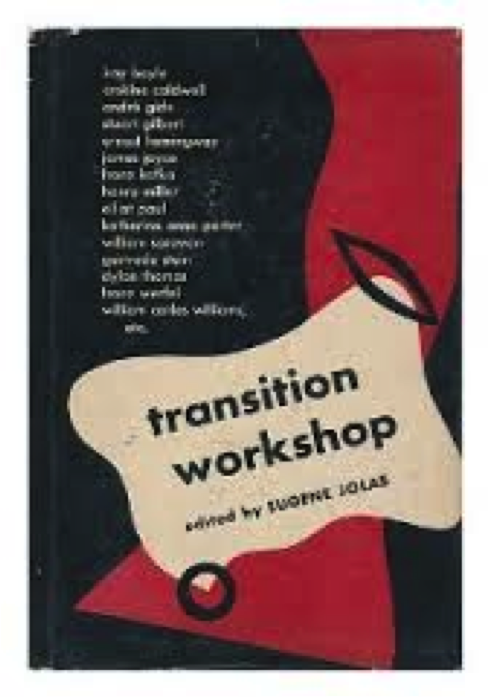
The next session of the Modernist Magazines Research Seminar will be held at 6pm on Tuesday 9 December. Cathryn Setz (Oxford) will be leading a workshop session on the little magazine transition. Please see below for more information. The seminar is open to everyone interested in modernism.

For more information, please email modernist.magazines.ies@gmail.com or visit http://modmags.wordpress.com


transition 1transition 2


Modernist Magazines Research Seminar

Tuesday 9 December (6pm) – Room G34, Senate House, London


Cathryn Setz (Oxford)

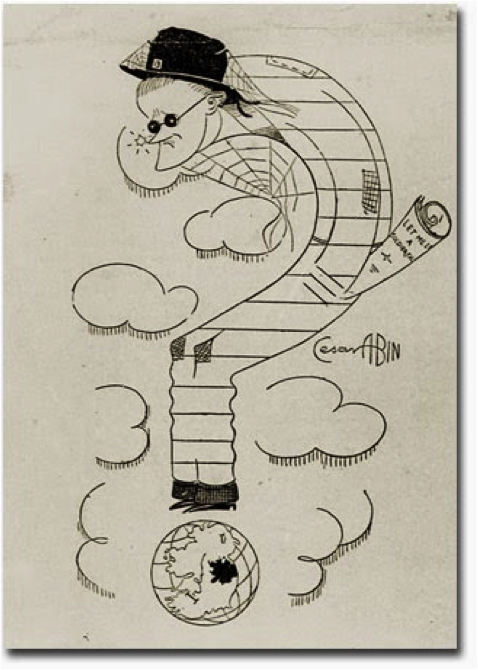
transition (1927-1938) was the largest non-commercial “little magazine”, and a major cultural document of transatlantic avant-garde culture. Yet the journal has been overlooked. Joyce scholars know it to an extent for its seriatim publication of the ‘Work in Progress’, the ongoing project that would become Finnegans Wake. Beckett scholars are aware that some of the playwright’s earliest poems and prose appear in over six issues across transition’s eleven-year run. Those who work on Stein know that the editors joined together in outrage at her exaggerated claims at having “started” the magazine, and released a 1935 pamphlet entitled “Testimony Against Gertrude Stein.” Fewer people are aware that the journal produced the earliest translations of Kafka made available for a US audience, or that more than any other title, transition translated almost every surrealist and expressionist poet contemporary to and preceding its production. Though it carried a different ethos to its more committedly avant-gardist fellow projects, such as Broom and Secession, or the Little Review, Maria and Eugene Jolas’s magazine aspired to offer a cultural bridge between Europe and North America. Problematic though such a gesture might be, the journal nonetheless packaged literary culture for its audiences, inspiring such later figures as Djuna Barnes, Henry Miller, Saul Bellow, and William Gaddis.

In this workshop, Cathryn Setz will look at some of the reasons why transition has been critically sidelined. We will look at its famous so-called “manifesto”, “The Revolution of the Word”, and consider how the journal was both innovative and stale, in different ways. We will also read over some key texts and editorial configurations that might help orient a closer reading, discussing the methodological issues we share in working on modernist periodicals, and critical strategies as emergent in the scholarly field. Cathryn will then discuss some of the parameters of her book-length study of the magazine, with the aim of sharing a conceptual framework and research questions of interest to us all.

Categories
CFPs Events Postgraduate

CFP: Elizabeth Bishop’s Questions of Travel

CFP: Elizabeth Bishop’s Questions of Travel (Sheffield University, 25-27 June 2015). http://elizabethbishopat50.wordpress.com  Deadline: 15 December.

Categories
NWIMS Past Events Postgraduate

‘New Work in Modernist Studies’ 2014 – programme and registration

Registration is now under way for the conference ‘New Work in Modernist Studies 4’, at Cardiff Metropolitan University (Cyncoed campus) on Saturday 6 December 2014. Attached is a full programme for the day, and a link to registration. It would help us if you could register by 28 November if at all possible. We look forward to welcoming you in Cardiff on 6th December.
The conference fee is £15 (£10 for BAMS members) and includes lunch, tea and coffee and a post-conference drinks reception / book launch.
Elizabeth English, Kathryn Simpson and Jeff Wallace
NWiMS2014 Programme
Conference Registration Form
Categories
Events Postgraduate

Event: Science and Poetry in in the 1920s and 1930s – 14 November, Oxford

This month at the University of Oxford’s Literature and Science Seminar, Dr Michael Whitworth (Merton College, University of Oxford) will be giving a talk entitled “Science and Poetry in the 1920s and 1930s”. The talk is free and open to all.

Friday 14th November, 2pm-3.30pm, Seminar Room B, Faculty of English, St Cross Building, University of Oxford

For more information about this seminar series and other literature and science talks taking place at Oxford, please visit http://litsciox.wordpress.com/events/


Categories
CFPs Postgraduate

CFP Rural Modernity Volume

Call for Chapter Proposals

Rural Modernity: A Collection of Essays

Deadline for Proposals: December 31, 2014

Edited by Kristin Bluemel, Monmouth University and

Michael McCluskey, University College London

We are seeking 500 word proposals for submissions to a collection of essays devoted to the theoretical and historical elaboration of the concept of rural modernity as it is worked out in literary, artistic, and other cultural objects and movements in early

twentieth-century Britain.

Please email queries to

Kristin Bluemel: kbluemel@monmouth.edu or

Michael McCluskey: michael.mccluskey@ucl.ac.uk


Despite the interwar explosion of books, advertisements, films, paintings, and pictures that depicted rural life, no study to date has looked into representations of the rural across diverse media. Nor has any study considered the relation of rural representation in early- and mid-twentieth-century culture to rural people who, as much or more than urban dwellers, grappled with the forces and effects of  modernization and modernity. Rural Modernity aims to bring together essays on literature, arts, crafts, and films to identify the interconnected—at times conflicting—ideas that images of the rural helped to circulate and to open up “rural modernity” as a particularly useful framework for further studies of interwar art and literature, and, more broadly, British culture.

Possible subjects include Writers: H. E. Bates, Adrian Bell, Kenneth Grahame, Lewis Grassic Gibbon, Thomas Hardy, Winifred Holtby, A. A. Milne, H. J. Massingham, Beverley Nichols, A. G. Street, Flora Thompson, Mary Webb, Francis Brett Young Artists: Evelyn Dunbar, Spencer Gore, Duncan Grant, Augustus John, Thomas Hennell, Laura Knight, Clare Leighton, John Nash, Paul Nash, Samuel Peploe, Gwen Raverat, Eric Ravilious, Stanley Spencer, Philip Wilson Steer Preoccupations: villages, cottages, country houses, farming, gardening, tourism and motoring, ramblers and anglers, folk dancing, Peacehaven and the Plotlands movement, rural industries and organic communities Media: books, prints, paintings, illustrations, photography, film, and mass print media.

The aims of writers and artists who engaged with ideas of the rural—evocation of lost worlds, celebration of new discoveries, participation in modernist experiments—tell only part of the story, and, while the essays included in Rural Modernity explore these motivations, they also seek to move beyond perceived oppositions between rural and urban/art and craft/modernism and middlebrow. The conception of rural modernity argued for in this collection makes connections within—and between—these distinctions while allowing for the complexity of the idea of “rural modernity” itself. How was it imagined? How was it marketed? Who promoted it and who opposed it? How have social historians and cultural geographers contributed to our understanding of rural modernity, and how can the concept of rural modernity contribute to literary studies, film studies, print culture studies, and art history?

Categories
Events Postgraduate

Culinary Modernism: A Roundtable Seminar in Oxford on 12 November

The Oxford 20th and 21st Century Graduate Works-in-Progress Seminar presents:

Culinary Modernism: A Roundtable Seminar
Dr Richard Brown (Leeds)

Wednesday 12 November (Week 5) at 6pm
Seminar Room B, Oxford English Faculty

Dr Richard Brown of Leeds University will lead a roundtable seminar in conversation with Nanette O’Brien on culinary modernism in Joyce, Stein and Mansfield. The reading for discussion is ‘The Kitchen Muse: The Modernist Cookbook and Its Sequels’ which is chapter 5 of Sandra Gilbert’s new book, The Culinary Imagination: From Myth to Modernity. This event is free of charge. Wine and soft drinks will be provided.

There are a limited number of places available for an organized dinner after the seminar at Jamie’s Italian with a set menu for £18 pp. If you are interested in joining us for dinner afterwards please email Nanette O’Brien at nanette.obrien@wolfson.ox.ac.uk by Monday 10 November at 5pm.

Conveners: Jennifer Cole [jennifer.cole@merton.ox.ac.uk], Benedict Morrison [benedict.morrison@merton.ox.ac.uk], Nanette O’Brien [nanette.obrien@wolfson.ox.ac.uk] and Natalie Ferris [natalie.ferris@queens.ox.ac.uk]

Categories
Uncategorized

The Cantos Project website – operational

Dear fellow modernists,

This is just a message to announce the official launch of The Cantos Project, a website dedicated to the study of Ezra Pound’s poem The Cantos.

The website is conceived as a work in progress which will occupy the Poundian community for a number of years. We have thirty years of research not packaged into a companion to the poem.
New Directions allows us to have six cantos live on the site at any one time. This situation lets us work serially, canto by canto. After the annotation of a canto is deemed complete, the glosses will be transferred to an online companion – a downloadable pdf. Canto I is annotated as an example.

The main thing is that The Cantos Project is an open resource, meant to serve everyone who has an interest and a need, whether for research or teaching. The first six cantos from Ur-I to III are online. So are the bibliographies, throughout the poem. No registration necessary, unless you want to contribute. If you’d like to follow the work, drop me an email to put your name on the mailing list, which will be operational by mid-November.

This is the address: http://www.thecantosproject.org

With all my best,

Roxana Preda
Editor of The Cantos Project