
Categories
CFPs Events Postgraduate

CFP: ‘Perfectly phrased and quite as true’: Aphoristic Modernity, 1890–1950

Call for papers

‘Perfectly phrased and quite as true’: Aphoristic Modernity, 1890–1950

We hold this truth to be self-evident: the conference will take place on the 4th of July 2015, at King’s Manor, University of York

Plenary speakers:
Dr Mark Sandy, Durham University
Dr James Williams, University of York

‘You cut life to pieces with your epigrams’, says Oscar Wilde’s Dorian Gray to Lord Henry. His statement is itself an adept epigram, encapsulating a particular kind of aphoristic writing which is pointed and authoritative, yet retains a hint of frivolity. Although aphoristic and epigrammatic writing hails from antiquity and has always been a diverse and popular literary genre, the final years of the Victorian era saw a surge in the popularity of the aphorism. As the rhythms of life and industry accelerated, along with the consumption of information, aesthetic fashions followed suit, and the aphorism came to encapsulate the condensation, spontaneity and fragmentation of late nineteenth- and early twentieth-century modernity. As Henry James’ epigrammatic assessment of the Victorian novel implied, ‘loose, baggy monsters’ were out, economy of language was in, and the art of aphorism was revivified.

Along with its subgenera, such as the epigram, the witticism, and the apophthegm, the aphorism expresses the kernel of a truth in surprising ways, while playfully destabilising it – a duality embodied by Friedrich Nietzsche’s Human, All Too Human (1878), one of the first modern works to undermine the systematised nature of western philosophical thought by employing aphoristic writing. On a more quotidian level, with advances in modern media drawing the cult of celebrity into the literary world, modern and modernist writers became celebrated for their bon mots. Accordingly, the nimble one-liner popularised by Wilde and Mark Twain was taken up and turned to different purposes by later public figures such as G.K. Chesterton, Winston Churchill, T.S. Eliot, and Dorothy Parker. As this diverse company suggests, the aphorism can assume as many styles and modes as possible themes, while its airtight economy squeezes and condenses meaning rather than whittling it. Like a quaint contraption ingrained with cryptic clues that slowly spool out meaning, the modern aphorism is ‘neither a truism on the one hand, nor a riddle on the other’, as the late-Victorian journalist, John Morley put it.

This one-day conference aims not only to showcase the distinctive character of aphoristic writing in modernity, but also to rehabilitate the critical status of this miniaturised, ephemeral literary genre. We invite 20 minute papers and panel proposals on any of the following variations upon this theme (although respondents should not consider themselves restricted to these topics):

·         Aphoristic subgenres (epigram, apophthegm, maxim, proverb, sententia, etc.)
·         Aphorisms and politics
·         Celebrity and sound-bites
·         Paradox and/or self-contradiction
·         Technical ingenuity and/or innovation of thought
·         Aphorisms and modernism
·         Aphorisms and decadence
·         The stylistics of aphorisms
·         Witticisms and quips
·         Earnestness and irony
·         Quibbling and wordplay
·         Management of meaning: ambiguity, multiplicity, denseness
·         fel vs mel epigrams
·         The practice of quotation
·         Epigraphs, dedications and other paratextual fragments
·         Aphorisms implanted within larger texts
·         Aphorisms and literary theory
·         Modern aphoristic writing as influenced by antiquity and the Renaissance
·         Anti-aphorisms: platitudes and commonplaces
·         Anti-aphorisms: parody and nonsense aphorisms
·         Conversational and anecdotal aphorisms

Panels will follow the format of three 20-minute papers followed by questions. Abstracts of no more than 250 words are invited by 1st April 2015. Please email submissions to aphoristicmodernity@gmail.com
Categories
CFPs Events Postgraduate

CFP: Writing Literary History: Europe 1900-1950 – Leuven

Writing Literary History: Europe 1900-1950

14-16 September 2015, University of Leuven

This conference is an initiative of the MDRN research lab at the University of Leuven (www.mdrn.be), which focuses on European literature from the (long) first half of the twentieth century. Recognizing that (modern) literary history is currently one of the main sites of theoretical and methodological reflection in literary studies, the conference aims to take stock of recent scholarship and to investigate how literary historical research has modified our understanding of writing between 1900 and 1950. We welcome proposals for papers which consider the following overall research questions and perspectives:

  • Many crucial notions in literary studies have been revalued in recent years in the practice of literary history. These include archive, period, book, event, media, genre, generation, objects, style and the senses. How exactly has this conceptual revaluation affected our view of literature’s and writers’ complex dynamics and functions between 1900 and 1950? What aspects and notions of writing require further attention in future literary histories?
  • Recent decades have seen an explosion of new or revised approaches in literary history. These include digital humanities, media archaeology, cognitive approaches, evocriticism and literary Darwinism, ecocriticism, object-oriented theories, affect theory and many more. Which of these are of special value to the history of literature from the modernist period and why?
  • Our understanding of literature’s ‘context’ has gone through drastic changes in the past decades. Once universally understood as the immediate institutional, economic or political constellation surrounding a text, ‘context’ in present-day literary studies means a lot of things, from the ‘brain’ (in cognitive studies) to the ‘universe’ (in so-called Big History). How can these drastic redefinitions help us to reconceive the history of literature between 1900 and 1950?
  • Place and space always have been said to be of significance to the historical development of European literature. What new approaches to space and place (from translation studies and memory studies to post-socialist research and geologically inspired methods working with concepts like deep time) allow us to reread the regional, national and transnational circulation of European writing during this half century?
  • Which new forms of reading to have gained weight in recent years (from distant reading and uncritical reading to non-reading and beyond) are of relevance to the historiography of literature from the modernist period? Similarly, what new or hitherto neglected aspects of the materiality, reception and production of texts can help us to cast new light on the writing in the period?
  • The first half of the twentieth-century saw the rise of many historiographical methods (from Formalism and early structuralism to neo-Marxism and early Critical Theory) that went on to play a crucial role in literary history. What aspects of these methods still hold potential today? Are there perhaps other approaches in literary history developed during the period have remained largely neglected but still hold promise?

Proposals for 20-minute presentations are welcome before 4 May 2015 and can be sent to: mdrn.wlh@gmail.com. Case-based contributions that can help us to revisit the writings from the modernist period will be considered, but our principal aim is to foster methodological and conceptual debate and to enhance the dialogue between the major literary and historiographical research traditions within Europe and beyond. For that reason proposals on general theoretical and methodological topics in the field of literary historiography (always with an emphasis on the period 1900-1950) will be favored. A selection of papers will be published after the conference.

For more information, visit www.mdrn.be.

Categories
CFPs Events Postgraduate

CFP: For a Materialist Psychoanalysis Conference – Warwick

For a Materialist Psychoanalysis Conference

University of Warwick, May 8-9, 2015


Confirmed Keynote Speakers:

Dina Al-Kassim (University of British Columbia)

John Fletcher (University of Warwick)

Conference Organisers:

Daniel Katz and Christian Smith, Department of English and Comparative Literary Studies, University of Warwick

Call for Papers

The purpose of this conference is to consider the usefulness of psychoanalysis for political critique, as well as politically-oriented frameworks for reading cultural phenomena. Rather than view psychoanalysis as a transhistorical, universal paradigm for resolving the mysteries of the human in all their manifestations, the goal will be to explore how psychoanalytic inquiry provides a way into history, rather than an escape from it. In terms of the current global economic predicament, we hope to investigate how psychoanalysis can help us move beyond the limited “rational choice” theories of neo-liberal economics without replacing them with a potentially problematic form of socialist rationalism sometimes embraced by the left. How can we envisage an economically egalitarian, cooperative, and democratic society while acknowledging that the symptom and the unconscious are inexpugnable from all social constructions? How can psychoanalysis help us to respond to the historical lesson of the twentieth century in which so many explicitly Marxist experiments perpetuated relations of domination in other forms and spectacularly failed to produce the transformation of social relations which is anti-capitalism’s greatest promise?

The relationship between psychoanalysis and Marxism has been fraught with tension throughout its history. Some Marxists claim that psychoanalysis is not materialist. However, this assertion suffers from the undialectical assumption that psychoanalysis is a homogeneous system of thought. Nothing could be further from the truth. There are many strands of contending scholarship that fall under the umbrella term psychoanalysis. Some are more materialist than others. In fact, it is possible to imagine that psychoanalysis could be a tool for a critique of contradictions such as that between materialism and non-materialism. Similar to Marxism, psychoanalysis should provide the means for its own auto-critique.

To investigate these broad questions, we intend to examine the history of joint articulations of psychoanaltyic and progressive thought—specifically Marxist—in the hopes of constructing new paradigms for progressive thinking and action. In particular, this conference calls for papers that explore or theorise psychoanalysis as a materialist practice. In this regard, we look forward to work on figures, groupings, and tendencies such as Surrealism, Reich, the Frankfurt School, the Situationists, the Lacanian-Althusserian nexus, schizoanalysis, queer studies, feminism, post-colonial studies, and Žižek, among many others. We would also welcome papers on the relationship between psychoanalysis as an institution and its own left-wing, including the relationship of Freud and his circle to radical politics in Vienna and beyond.

The conference will be comprised of two main components:

1. Conference papers (May 9). Please submit 300-400 word proposals for 30-minute papers to both d.katz@warwick.ac.uk and Christian.Smith@warwick.ac.uk by December 15, 2014.

2. Post-Graduate Student Workshops (May 8, Chaired by Dr. Christian Smith, attended by keynote speakers). These workshops are open to doctoral students and postdoctoral researchers. Papers will be distributed to all before the conference for critical reading. The seminars will consist of short summaries of each paper’s main argument and discussion between participants. One of the conference’s keynote speakers will participate in each discussion. To be considered for this workshop, please send an abstract of approximately 300 words to Christian.Smith@warwick.ac.uk and d.katz@warwick.ac.uk by December 15, 2014.

Categories
Events Postgraduate

‘Transatlantic Literature in Context’: Lee Jenkins on D. H Lawrence and American studies – Thursday 4 December, Oxford

On behalf of Dr Tara Stubbs, University of Oxford. Open to all.

Dear all,

We really hope you’ll be able to join us this Thursday for the final seminar of the term, to which we’re really excited to have invited Lee Jenkins, Senior Lecturer in English from University College Cork. I’ve seen an early version of her new book, The American Lawrence, and I think it’s going to be a very significant piece of criticism.

The seminar takes place this Thursday, 5.15-6.45pm, Seminar Room B at the English Faculty: please see below for a short abstract.

With best wishes,

Tara

This paper makes a case for what Lee M. Jenkins’ forthcoming book of that title calls The American Lawrence. Jenkins discusses the writing, creative and critical, which D.H. Lawrence produced in the United States between 1922 and 1925, arguing that Lawrence is relevant to the globalised paradigms of American Studies today.
Categories
CFPs Postgraduate

CFP: Olive Moore: Modernist Extraordinaire

CFP:  Olive Moore: Modernist Extraordinaire

Deadline for Abstracts: March 1, 2015.

             We invite submissions for a volume of essays on English modernist Olive Moore. Today Moore is scandalously under-read, but between 1929 and 1934 she published three brilliant novels—Celestial Seraglio (1929), Spleen (1930), and Fugue (1932)—as well as a dazzling and caustic collection of aphorisms on modern culture, art, nationality, religion, and sexual difference titled The Apple is Bitten Again (1934). During this period Moore worked as a journalist for London’s Daily Sketch, publishing articles under her real name, Constance Vaughan, on a diverse range of topics such as child rearing, fashion, politics, gossip, interior design, public monuments, and modern art. The editors seek papers on any aspect of Moore’s work, particularly with a view to the following: What is the rationale for recuperating an experimental writer such as Moore now? On what basis can we formulate an approach to her work that is relevant to contemporary concerns within modernist studies? How do we talk about her writing in this transnational, global, and post-identitarian age? How might the following categories help us to situate Moore’s writing: disability studies, queer theory, new materialisms, feminist aesthetics, periodical studies, animal studies and/or the politics of affect? This volume will be the first published collection on Olive Moore’s work. Ashgate Publishing has expressed preliminary interest.

Please submit 500-word abstracts and short CVs to Jane.Garrity@Colorado.edu and Renee Dickinsonrenee@r-n-r.org by March 1, 2015.

For preliminary e-mail inquiries, please include “Olive Moore” in the subject line.

Completed essays (7,000 words) will be due March 1, 2016.

Categories
Postgraduate

Doctoral Funding Opportunities in Literature (University of Brighton)

There are currently funding opportunities for students wishing to pursue
PhD studies at the University of Brighton. These are the Doctoral Training
Partnership studentships (TECHNE), which require students to work with
partner organisations during the writing of their thesis, and the
University of Brighton studentships, which focus students on the thesis
alone. Both schemes offer fully-funded doctoral studies (stipend and fee
waiver). The deadline for applications to the TECHNE scheme is 23 January
2015 and successful applicants will commence study in October 2015.

For further information on the schemes and details about how to apply see:
http://arts.brighton.ac.uk/research/doctoral-centre-arts/studentships

The Literature team welcomes applications on a wide range of subjects from
the Early Modern period to Twenty-First Century literature. For an outline
of the team’s interests, see:

http://arts.brighton.ac.uk/study/english-literature-studies-brighton/phd-literature-brighton

Applicants are advised to contact potential supervisors to gain advice on
developing the proposal before submission.

For further information contact Dr Andrew Hammond at
A.N.Hammond@brighton.ac.uk

Categories
Postgraduate

Open Modernisms Project

Open Modernisms

Recently there have been discussions among Modernist Studies Association members about the lack of an ideal anthology of modernist primary sources for use in the classroom. While many of the texts we frequently teach are now out of copyright and are available online through Project Gutenberg, Google Books, and other digitisation initiatives, there remains no systematic way for lecturers to gather these materials, ensure that they are reliable texts, and distribute them to students. Open Modernisms is a collaborative effort on the part of modernist scholars to make out-of-copyright texts available for teaching. The freely available resource will allow lecturers and students to access and curate a customizable selection of essays and manifestos by modernists about modernism. The resource will focus first on “primary secondary” materials — works like Woolf’s “Modern Fiction,” and Pound’s “A Retrospective.” The editorial board will implement a rigorous process to ensure that readers can access full bibliographic details, and the team will also have checked that the texts are accurate representations of the source editions. The texts will be available to read online and to print for classroom use. We hope to have the resource ready in time for use in teaching courses that begin in Fall 2015.

If you would like further information about the project (including technical specifications) or would like to participate either by undertaking editorial work or by sharing scanned copies of modernist sources with the team, please contact Claire Battershill (c.d.battershill@reading.ac.uk).

Dr. Claire Battershill

SSHRC Postdoctoral Fellow
Department of English
University of Reading
http://www.clairebattershill.com

Categories
Events Postgraduate

Modernist Magazines Research Seminar – Tuesday 9 December

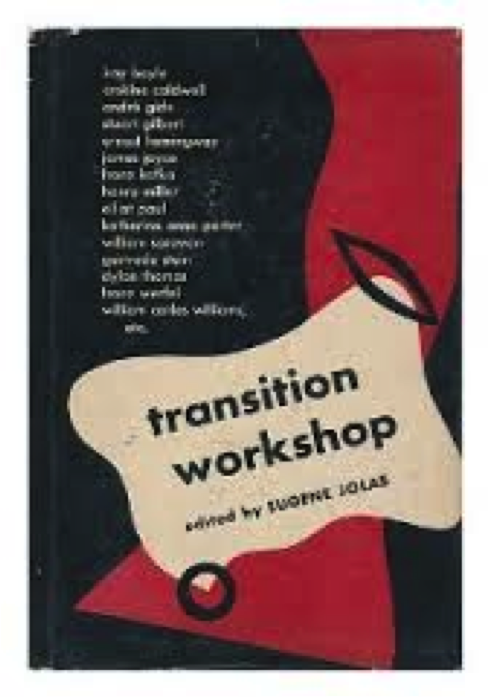
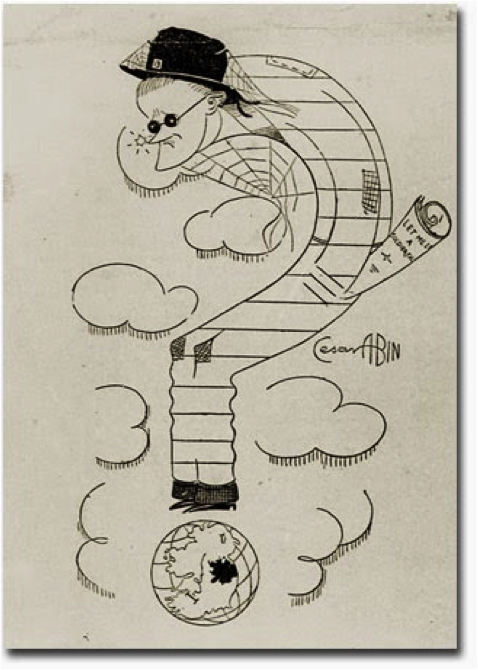
The next session of the Modernist Magazines Research Seminar will be held at 6pm on Tuesday 9 December. Cathryn Setz (Oxford) will be leading a workshop session on the little magazine transition. Please see below for more information. The seminar is open to everyone interested in modernism.

For more information, please email modernist.magazines.ies@gmail.com or visit http://modmags.wordpress.com


transition 1transition 2


Modernist Magazines Research Seminar

Tuesday 9 December (6pm) – Room G34, Senate House, London


Cathryn Setz (Oxford)

transition (1927-1938) was the largest non-commercial “little magazine”, and a major cultural document of transatlantic avant-garde culture. Yet the journal has been overlooked. Joyce scholars know it to an extent for its seriatim publication of the ‘Work in Progress’, the ongoing project that would become Finnegans Wake. Beckett scholars are aware that some of the playwright’s earliest poems and prose appear in over six issues across transition’s eleven-year run. Those who work on Stein know that the editors joined together in outrage at her exaggerated claims at having “started” the magazine, and released a 1935 pamphlet entitled “Testimony Against Gertrude Stein.” Fewer people are aware that the journal produced the earliest translations of Kafka made available for a US audience, or that more than any other title, transition translated almost every surrealist and expressionist poet contemporary to and preceding its production. Though it carried a different ethos to its more committedly avant-gardist fellow projects, such as Broom and Secession, or the Little Review, Maria and Eugene Jolas’s magazine aspired to offer a cultural bridge between Europe and North America. Problematic though such a gesture might be, the journal nonetheless packaged literary culture for its audiences, inspiring such later figures as Djuna Barnes, Henry Miller, Saul Bellow, and William Gaddis.

In this workshop, Cathryn Setz will look at some of the reasons why transition has been critically sidelined. We will look at its famous so-called “manifesto”, “The Revolution of the Word”, and consider how the journal was both innovative and stale, in different ways. We will also read over some key texts and editorial configurations that might help orient a closer reading, discussing the methodological issues we share in working on modernist periodicals, and critical strategies as emergent in the scholarly field. Cathryn will then discuss some of the parameters of her book-length study of the magazine, with the aim of sharing a conceptual framework and research questions of interest to us all.

Categories
CFPs Events Postgraduate

CFP: Elizabeth Bishop’s Questions of Travel

CFP: Elizabeth Bishop’s Questions of Travel (Sheffield University, 25-27 June 2015). http://elizabethbishopat50.wordpress.com  Deadline: 15 December.

Categories
NWIMS Past Events Postgraduate

‘New Work in Modernist Studies’ 2014 – programme and registration

Registration is now under way for the conference ‘New Work in Modernist Studies 4’, at Cardiff Metropolitan University (Cyncoed campus) on Saturday 6 December 2014. Attached is a full programme for the day, and a link to registration. It would help us if you could register by 28 November if at all possible. We look forward to welcoming you in Cardiff on 6th December.
The conference fee is £15 (£10 for BAMS members) and includes lunch, tea and coffee and a post-conference drinks reception / book launch.
Elizabeth English, Kathryn Simpson and Jeff Wallace
NWiMS2014 Programme
Conference Registration Form